US university admissions for Indian students is not a mystery. Harvard's acceptance rate sits at 3.4%. For Indian applicants, it is lower. But the families who panic over that number are asking the wrong question. The right question is: what do these universities actually want, and how do you build a profile that gives them a reason to say yes?
I attended Harvard on a full scholarship. I have guided 500+ students from India to top 30 US universities, with an average scholarship of Rs.1 Crore per admitted student. What I have seen, without exception, is that the students who get in are not smarter or more talented than the ones who do not. They are more strategic. They understood what these universities value before they started building their profiles.
This guide covers everything: academics, extracurriculars, essays, financial aid, letters of recommendation, and the application timeline that gives Indian students the best shot at the schools they are targeting. Read each section in order. The most common mistakes Indian applicants make come from skipping the strategy and going straight to the application form.
Why US Universities Want Indian Students (and What They Actually Look For)
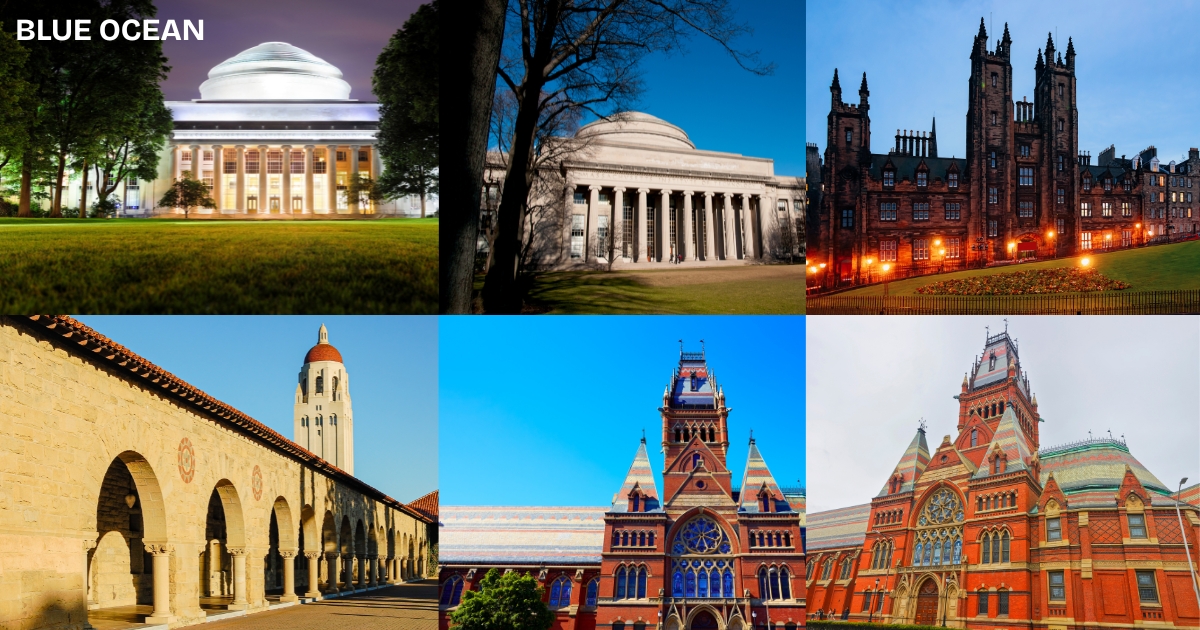
US universities do not have quotas for Indian students. They do not admit students by country of origin. But they are actively building diverse, intellectually engaged classes, and Indian students who understand this have a real advantage over those who treat the process like a marks-based competition.
What top US universities want is simple to state and hard to execute. They want students who will contribute something specific to campus. Not students who will study hard and get good grades. Students who will start things, challenge ideas, bring perspectives that other students do not have, and make their peers think differently. This is what admissions officers mean when they talk about "fit."
For Indian applicants specifically, the challenge is differentiation. Harvard receives thousands of applications from high-scoring Indian students every year. Most of them have similar profiles: strong boards, tutored SAT scores, a list of extracurriculars, and essays that describe how much they want to study at Harvard. None of that is compelling. What is compelling is a student who has done something genuinely unusual, built it over years, and can articulate why Harvard is the specific next step for the work they are already doing.
When US universities say they review applications "holistically," they mean no single factor is disqualifying or sufficient. A 99% CBSE score does not guarantee admission. A 91% does not prevent it. What matters is the complete picture your application paints. Every element, grades, activities, essays, recommendations, must tell a consistent story about who you are and what you will bring to campus.
Academic Requirements: Grades, SAT/ACT, AP/IB
Academic requirements for US universities are the baseline, not the differentiator. You need to clear them. But clearing them alone does not move you forward in the process.
For Indian board students applying to top-10 schools, the realistic academic threshold looks like this: 95%+ in CBSE or ICSE (or equivalent), 40+ in IB, and a strong SAT or a strategic test-optional decision. AP courses are not required for Indian students, but if your school offers them and you score 4 or 5, they signal academic rigor that some Indian school curricula do not convey to US admissions readers.
The SAT question is genuinely nuanced in 2026. Most top universities, including Harvard and MIT, remain test-optional. If your score is 1550 or above, submit it. It strengthens your application. If your score is below 1500 for top-10 schools, submitting it is likely to work against you. Apply test-optional and ensure every other element of your profile is doing the work that the test score would have done. The College Board's SAT suite has the current test structure and preparation resources if you are planning to sit the exam.
The admissions reality most Indian families miss: A student with a 93% CBSE score and a genuinely distinctive extracurricular spike has a better shot at Harvard than a student with a 98% and a generic list of activities. Grades clear the threshold. Everything else makes the case.
IB students have a structural advantage in US admissions because the IB curriculum is globally recognised and demonstrates academic breadth. A predicted score of 40+ is competitive for top schools. Scores of 42-45 are exceptional and carry real weight. For CBSE and ICSE students, grade context matters. If you are at an elite school where 95%+ is common, the admissions office will read your score relative to your school's profile, not in isolation.
The Extracurricular Strategy That Works (The Spike)
This is the section most Indian families spend the least time thinking about, and it is the one that determines outcomes more than any other factor at top-10 US universities.
Most Indian students applying to US universities list 8-10 extracurricular activities. The ones who get into Harvard and MIT typically list 3-5, but they have gone so much deeper into one of them that the activity becomes the defining feature of their application. At Blue Ocean, we call this your spike. MIT calls it "match." Harvard calls it "impact." The name does not matter. The concept is the same: do one thing at an exceptional level and make that the center of your application story.
What does a spike look like in practice? Priya from Mumbai founded a coding initiative for rural schools in Maharashtra when she was in Grade 10. By the time she applied to Harvard, the program had trained over 200 students and was operating in 12 schools. She was not just a student who "liked coding" or who had "volunteered." She had built something real, at scale, that solved a specific problem she had identified. That is a spike. It got her into Harvard with Rs.95 lakh in financial aid.
Ananya from Bangalore took a different path. She conducted original machine learning research at 17 and had it published at an IEEE conference. The research was not done as a school project. She did it independently, found a faculty mentor at a local institution, and produced work that stood on its own merits in a peer-reviewed forum. Stanford admitted her with Rs.1.3 Crore in financial aid. The spike was the research, not the IIT-preparation classes she had also attended.
The spike does not have to be a startup or published research. It can be competitive success in a field (national-level awards, not local or school-level), a creative body of work, documented social impact, or exceptional achievement in athletics, arts, or debate. What it cannot be is shallow. Clubs you joined but did not lead, competitions you entered but did not win, volunteering you did for a semester. None of that constitutes a spike. Depth over breadth, always.
A credible spike takes 18-24 months to build. Start at the beginning of Grade 11. Identify the one area where you can go deeper than any other applicant in your school, then build in that direction consistently. By Grade 12, you should have concrete outcomes: something built, something published, something won, or something that measurably changed a situation beyond your classroom.
Essays: The Most Underestimated Factor
The Common App essay is 650 words. Most students spend 2-3 hours on it. The students who get into Harvard typically spend 40-60 hours on it across multiple drafts over several months. That difference in effort reflects a fundamental misunderstanding of what the essay is for.
The essay is not a summary of your achievements. The admissions officer already has your activities list, your grades, and your test scores. The essay is the one place in the application where your voice is completely unfiltered. It is where the committee decides whether they want to spend four years with you. An essay that describes how your SAT prep or board exams shaped you, or that explains your love of science without showing what makes you specifically interesting, wastes the only opportunity you have to be a real person in a folder full of statistics.
The best Common App essays from Indian applicants I have read share three things. First, they are specific. Not "I learned to value family" but a single, concrete moment that reveals character. Second, they are honest. The applicant is not trying to sound impressive. They are trying to be understood. Third, they connect to the rest of the application without explicitly doing so. The essay shows the person behind the spike, not a repeat of the activities list.
The Common App essay prompts for 2025-2026 give you seven options. Most applicants choose the "background, identity, interest, or talent" prompt. That is fine, but only if you have something genuinely distinctive to say. The best prompt for you is the one that lets your voice come through most naturally, not the one that sounds most impressive on the surface.
Supplement essays matter just as much as the Common App essay at schools like MIT and Stanford, which require multiple short answers. MIT's "Why MIT?" is notoriously specific. A generic answer about "world-class research" will not work. You need to name specific labs, professors, programs, or initiatives at MIT that connect to the work you are already doing. That level of specificity signals genuine interest and research, and it matters to every admissions committee.
Letters of Recommendation: What US Colleges Expect
Most top US universities require two teacher recommendations and one counselor recommendation. The teacher recommendations should come from teachers in core academic subjects who know you well as a thinker, not just as a student who scored high in their class.
The single biggest mistake Indian students make with recommendations is selecting teachers based on which subject they scored highest in. A math teacher who can say "Rahul scored 98% in my class" is far less valuable than an English teacher who can say "Rahul asked questions that changed the direction of our seminar discussions three times this semester." US admissions officers read thousands of Indian recommendations that confirm strong grades. They rarely see one that shows what a student is like in intellectual conversation.
Give your recommenders at least three months of notice. Provide them with a one-page summary of your activities, your spike, your target schools, and what you hope they might speak to. Do not tell them what to write. Give them context. The best recommendations come from teachers who understand your full application story, not just your performance in their subject.
Most Indian schools, including elite IB schools, have limited experience writing counselor recommendations for US universities. Your school counselor may not know what US admissions committees are looking for. If possible, brief your counselor in writing about your spike, your goals, and the specific context that makes your application distinctive. A well-briefed counselor writes a far more useful recommendation than one who is working from your official school record alone.
Financial Aid and Scholarships for Indian Students
Financial aid is the area where most Indian families have the most misconceptions, and where the stakes are highest. The short version: Harvard, MIT, Princeton, Yale, and a handful of other schools meet 100% of demonstrated financial need for all admitted students, including international students. If your family earns below a certain threshold, your education at these schools can cost less than the fees at many Indian private universities.
Meera from Hyderabad is a good example of how this works in practice. She built a solar irrigation system for a farming community in Telangana over two years in Grade 11 and 12. The project was real, functional, and documented with measurable outcomes. Yale admitted her. The financial aid package came to Rs.1.15 Crore for the first year alone. Her family's financial profile qualified her for substantial need-based support, and Yale's need-blind admissions policy for international students meant her family's income did not factor into the admissions decision.
Rahul from Mumbai took a different route to Cornell through the Tata Scholarship program. Cornell's Tata Scholarship is one of the most reliable and substantial scholarships available specifically to Indian students at a top-10 US university. Rahul secured Rs.92 lakh through this route. For families targeting Cornell specifically, understanding the Cornell Tata Scholarship requirements and building toward them from Grade 11 is a strategic decision worth making early.
For the complete picture of all scholarship options, including university-level need-blind financial aid, external scholarships, and India-based funding programs, read our full guide to scholarships for Indian students studying in the USA. The financial aid section of this pillar is a summary. That guide is the deep dive.
Harvard's financial aid office publishes their net price calculator online. If you have not used it, do so now. It takes 10 minutes and gives you a realistic estimate of what Harvard would actually cost your family. The number is often significantly lower than Indian families expect.
This is exactly where getting professional guidance early makes a measurable financial difference. A profile evaluation from Dr. Sanjay covers your admissions strategy and your financial aid positioning in the same session. Get your profile evaluation here, and you will leave with a specific action plan, not general advice.
University-by-University Breakdown
Each top US university has a distinct admissions culture. What works at MIT does not always work at Yale. Understanding the differences is not optional if you are building a target school list. Below is an overview of each major school, with links to our detailed cluster guides for the universities where we have the most data from Indian applicants.
Harvard University
Harvard's acceptance rate for the Class of 2028 was approximately 3.4%. For international applicants, the pool is more competitive. Harvard is need-blind for all admitted students, including internationals, and meets 100% of demonstrated financial need. The admissions process places heavy weight on personal qualities, contributions to the class, and what Harvard calls "personal character." Academic achievement is the floor, not the ceiling.
Indian students who succeed at Harvard typically have a spike with clear impact beyond their school and city, essays that reveal genuine intellectual curiosity rather than ambition, and recommendations that speak to how they think, not just what they score. Read our complete guide on how to get into Harvard from India for the full admissions breakdown, with specific examples of what Harvard's Indian admits look like. You can also visit Harvard's official admissions page for current application requirements and deadlines.
MIT
MIT is the most academically specific of the top universities. Students who succeed here have deep, demonstrated passion for STEM fields, not just strong grades in science and math. The admissions team at MIT reads applications looking for what they call "match," the degree to which a student's intellectual interests and activities align with what MIT actually is. A student who has done original research, built something functional, or competed at a national or international level in a technical field has a fundamentally different application than one who has only studied hard.
MIT is also test-flexible. Strong math scores and subject test results carry real weight. Our detailed cluster on how to get into MIT from India covers the admissions strategy in full, including MIT's five-essay structure and how Indian students should approach each prompt. For the official requirements, see MIT's application page. A separate cluster covers MIT admission requirements specifically for Indian students, including how CBSE and IB are evaluated.
Stanford University
Stanford's admissions process is the least formulaic of the major US universities. The school explicitly states that there is no admissions formula, and it means it. What Stanford consistently admits is students with a specific, credible enthusiasm, for a field, a problem, or an idea, that shows up in everything they do. The essays at Stanford are deliberately open-ended and designed to reveal personality. "What matters most to you and why?" is one of the questions Stanford asks. There is no right answer. There is only an honest one.
Stanford is need-blind for US citizens and meets demonstrated need generously. For international students, Stanford is need-aware, meaning financial need can factor into the admissions decision. Indian families with significant financial need should factor this into their school list strategy. For the complete breakdown, read our guide on how to get into Stanford from India. The official Stanford admissions office also publishes detailed guidance for international applicants.
Yale University
Yale places an unusually strong emphasis on community and intellectual engagement outside the classroom. The school is looking for students who will engage with Yale's residential college system, contribute to campus life, and pursue their interests with genuine depth rather than strategic calculation. Yale's admissions readers are experienced at spotting applications built around "what Yale wants to see" rather than authentic interest. The former rarely succeeds.
Yale is need-blind for all admitted students and meets 100% of demonstrated financial need. For Indian families with documented financial need, Yale is one of the most generous schools in the US. Read our full cluster on Yale admissions for Indian students for the strategy that works. The official Yale international students admissions page has current requirements and guidance.
Harvard Business School
Harvard Business School is a graduate program, not an undergraduate one. If you are targeting HBS for an MBA, the admissions criteria are entirely different from undergraduate Harvard. HBS requires 2+ years of post-undergraduate work experience for most applicants, a demonstrated leadership record in professional settings, and essays that reveal specific management potential. The GMAT or GRE is required.
Indian applicants to HBS face a highly competitive pool. India is one of the most represented nationalities in HBS applications. Standing out requires a genuinely distinctive professional story, not just strong credentials from a top Indian employer. Our cluster on how to get into Harvard Business School from India covers the specific profile requirements and strategy for Indian MBA candidates.
Princeton, Columbia, Cornell, and Brown
Princeton is fully need-blind for all applicants and meets 100% of demonstrated need. It does not offer merit scholarships. For Indian families with significant financial need, Princeton is one of the strongest options on any target school list. Visit Princeton's admissions office for current application requirements.
Columbia is located in New York City, and its admissions culture reflects that. Urban engagement, intellectual curiosity, and a genuine interest in the school's Core Curriculum are factors that carry real weight. Columbia's financial aid is generous but not need-blind for internationals.
Cornell has the Cornell Tata Scholarship, which is one of the only major scholarships specifically designed for Indian undergraduate students at a top-10 US university. If you are a strong Cornell applicant with demonstrated financial need, this scholarship should be a central part of your funding strategy. Cornell is also the largest of the Ivy League schools, with a broader range of programs and a slightly higher acceptance rate than Harvard, Yale, or Princeton.
Brown is the most flexible of the Ivies in terms of curriculum. Its Open Curriculum allows students to design their own course of study without distributional requirements. Students who thrive at Brown are those who have demonstrated genuine intellectual independence rather than structured academic achievement. Brown's financial aid is strong but not need-blind for international students.
The Application Timeline: Month-by-Month from Grade 11
The students who get into top US universities from India are not the ones who started preparing in Grade 12. They are the ones who understood in Grade 11 that the application is built over 18-24 months, not written in the final semester before submission.
Grade 11, Term 1 (June-September): This is the foundation phase. Identify your spike. It should be one area where you can go significantly deeper than your existing involvement. Start building, not planning to build. Take the PSAT or a practice SAT to establish your baseline. Research 20-30 US universities and narrow to a working list of 12-15.
Grade 11, Term 2 (October-March): Build the spike. If it is research, identify a mentor and start the work. If it is entrepreneurial, launch and document. If it is competitive, compete at the highest level available to you. Take the SAT or ACT. If your score is above 1500, consider one more attempt. Begin reading about the schools on your shortlist, not their brochures but their course catalogs, faculty research, and student publications.
Grade 11 Summer (April-May): This is the most underused period in the Indian admissions calendar. Strong applicants use this summer for a high-value activity directly related to their spike: a research program, an internship, a project with documented outcomes. College counselors and admissions consultants can help you identify specific programs that align with your profile. Begin drafting your Common App essay in rough form. You are not writing a final draft. You are exploring what you actually want to say.
Grade 12, Term 1 (June-September): Finalize your school list. Decide on Early Decision or Early Action schools. Write and revise all essays. Request recommendation letters from teachers, giving them the full context of your application by August. The Common App platform opens August 1. Complete your profile by September.
October-November (Early Deadlines): Early Decision and Early Action deadlines for most top schools fall between November 1 and November 15. Submit early applications only when they are genuinely ready. A rushed early application is worse than a polished regular decision application. Hear back on ED/EA decisions in December.
December-January (Regular Decision): Complete and submit remaining Regular Decision applications. Most RD deadlines fall January 1-15. Revisit each school's supplemental essay requirements carefully. Generic "Why This School?" essays are the most common reason otherwise strong applicants are rejected at the final stage.
Common Mistakes Indian Applicants Make
After reviewing hundreds of Indian applications to top US universities, the mistakes cluster around the same patterns. Knowing them in advance does not eliminate them, but it reduces the chance you make them.
Mistake 1: Treating the application like a marks competition. Indian academic culture rewards measurable performance. The US application rewards demonstrated impact. Students who list their board percentages as their primary selling point are missing the point of the process entirely.
Mistake 2: Listing activities instead of building depth. Eight surface-level extracurriculars do not add up to one compelling spike. They add up to a profile that looks busy without being interesting. The 10 activity slots on the Common App are not meant to be filled. They are meant to be curated.
Mistake 3: Writing essays for an imagined audience. Indian students often try to guess what Harvard "wants to hear" and write toward that imagined preference. The result is an essay that sounds like every other Indian application. The essays that work are specific, personal, and surprising. They are not strategic documents. They are honest ones.
Mistake 4: Applying to too many or too few schools. A list of 15 schools all above your realistic range is not a strategy. A list of 3 target schools with no safety options is a gamble. A well-constructed list of 10-14 schools includes reach, target, and likely options, with a financial aid strategy mapped onto each one.
Mistake 5: Starting too late. The single most common regret among Indian families who come to us in Grade 12 is that they did not start earlier. One semester of Grade 12 is not enough time to build a spike, write strong essays, prepare recommenders, and research schools properly. The students who succeed started in Grade 11 and used the summer between grades strategically.
Mistake 6: Ignoring financial aid strategy. Applying to a list of top US universities without mapping your family's financial profile to each school's aid policies is leaving money on the table. Need-blind schools are a different calculation from need-aware schools. Knowing which is which, and applying accordingly, can mean a difference of Rs.50 lakh or more in your final financial aid package.
When to Get Professional Help
Not every student needs a consultant. Students with an obvious spike, strong self-awareness, and a clear application story can build competitive applications independently. But for most Indian students, professional guidance at the right moment makes a measurable difference, not just in the application but in the profile-building that happens 18-24 months before the application is submitted.
The right time to get professional help is at the beginning of Grade 11, not the month before applications are due. By Grade 12, the major profile decisions have already been made. A consultant working with a Grade 12 student can improve essays and positioning, but cannot change the spike, the extracurricular depth, or the academic trajectory. That work happens earlier.
The right consultant is one who has direct experience with the admissions process at the schools you are targeting. Generic advice about "showing passion" and "being yourself" is not a strategy. A specific action plan, tailored to your profile and your target schools, built on real data from admitted students, is what the process requires.
At Blue Ocean, the profile evaluation is where this starts. Dr. Sanjay reviews your current profile, identifies the gaps between where you are and where you need to be for your target schools, and gives you a specific 48-hour action plan. It is not a sales meeting. It is a working session with someone who has done this for 500+ students and attended Harvard himself on a full scholarship. Get your profile evaluated here.
Frequently Asked Questions
What GPA do Indian students need for Ivy League universities?
There is no fixed GPA cutoff. Harvard, MIT, and Stanford evaluate Indian board results (CBSE, ICSE, IB) in context. Most admitted Indian students score 95%+ in boards or 40+ in IB. But scores alone do not get you in. Your extracurricular spike and essays carry equal weight at these universities. A 93% with a genuine spike and strong essays is more competitive than a 98% with a generic profile.
Can Indian students get full scholarships to US universities?
Yes. Harvard, MIT, Princeton, Yale, and Amherst meet 100% of demonstrated financial need for all admitted students, including internationals. Blue Ocean students have secured an average of Rs.1 Crore in scholarships. The key is applying to need-blind or need-aware schools strategically based on your family's financial profile. Some schools, like Cornell, also have India-specific scholarships such as the Tata Scholarship that are worth targeting directly.
Is SAT required for Indian students applying to US universities?
Most top US universities are test-optional through 2026, including Harvard and MIT. However, a strong SAT score (1550+) still strengthens your application. If your score is below 1500 for top-10 schools, submitting it may hurt more than help. Apply test-optional and let your profile speak instead. Subject test scores in math and sciences remain a useful signal for technical programs even where the general SAT is optional.
When should Indian students start preparing for US university applications?
The ideal starting point is the beginning of Grade 11 (age 15-16). This gives you 18-24 months to build extracurricular depth, prepare for standardised tests, develop your essay narrative, and research universities. Starting in Grade 12 is possible but significantly limits your options for building a competitive profile. The extracurricular spike, which is the most important differentiator for Indian applicants, requires sustained time to develop.
- Harvard College Admissions: college.harvard.edu/admissions
- Harvard Financial Aid: college.harvard.edu/financial-aid
- MIT Admissions: mitadmissions.org/apply
- Stanford Admissions: admission.stanford.edu
- Yale Admissions: admissions.yale.edu
- Princeton Admissions: admission.princeton.edu
- Cornell Tata Scholarship: admissions.cornell.edu/tata-scholarship
- Common Application: commonapp.org
- College Board SAT Suite: satsuite.collegeboard.org/sat
- Institute of International Education: iie.org