Figuring out how to get into MIT from India starts with accepting one number: roughly 15 to 20 Indian students are admitted each year. Out of more than 1,500 Indian applicants. That is an acceptance rate of 1 to 1.5 percent, lower than MIT's already selective overall rate of around 3.9 percent.
This post is not a generic requirements list. It is a strategy guide based on what actually separates admitted students from rejected ones. The academic bar, the research profile, the essays, the financial aid picture, and the specific mistakes Indian applicants make that cost them a spot. This post is part of our complete guide to getting into top US universities from India.
MIT Acceptance Rate for Indian Students (the actual numbers)
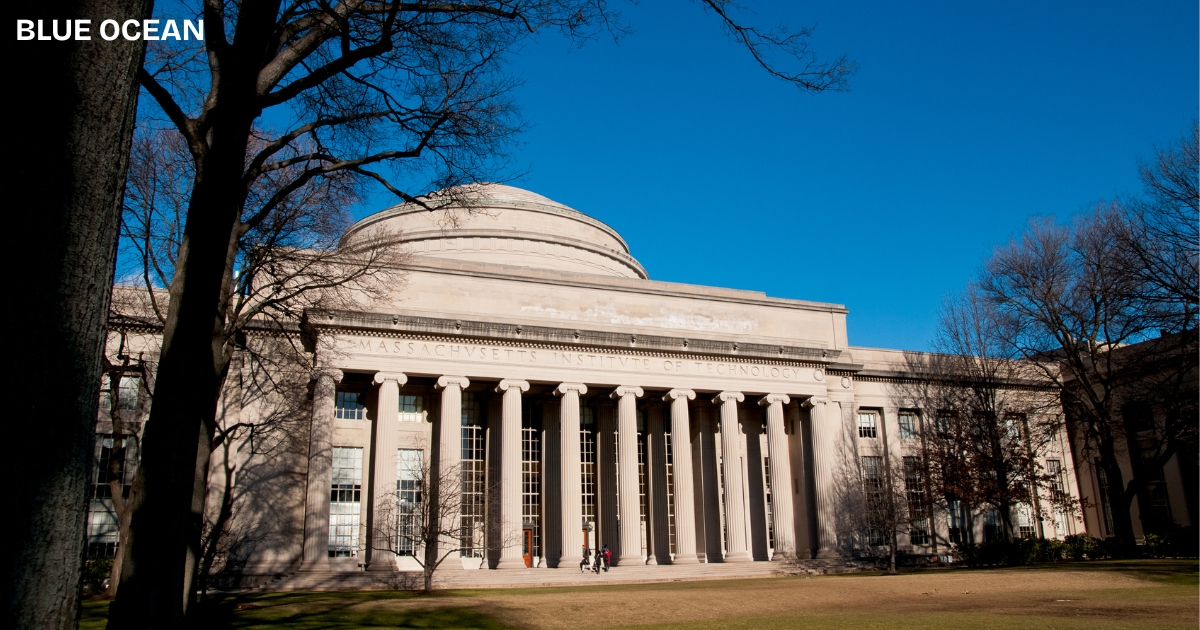
MIT's overall Class of 2028 acceptance rate was 3.9 percent. For Indian students, the effective rate is closer to 1 to 1.5 percent. This is extrapolated from MIT's international admission data and comments admissions officers have made publicly about applicant pool composition.
In practical terms: if your school sends two strong applicants to MIT every year, statistically one of them gets in every few years. Not every cycle. The competition among Indian applicants is not just against the global pool. It is against a concentrated group of students from IB and CBSE schools who all have near-perfect grades, strong SAT scores, and science olympiad results.
The students who break through are not necessarily more academically accomplished. They are more strategically positioned. They built a profile that MIT's specific evaluation framework rewards. Everything in this guide is oriented around that framework.
What Makes MIT Different from Ivy League Schools
MIT is not an Ivy League school. That distinction matters beyond branding. The entire evaluation philosophy is different. Harvard, Yale, and Princeton are looking for students who will represent the institution well across every dimension: academically, socially, professionally, and in public life. They want rounded people with compelling narratives.
MIT is looking for something they explicitly call "match." They want to know whether you will thrive in MIT's specific environment: intensely technical, highly collaborative, project-driven, and built around hands-on problem solving. A student who would be a strong fit at Harvard could be the wrong fit for MIT, and vice versa.
MIT's admissions blog puts it plainly: "We are looking for people who want to make, build, create, discover. Not for people who want to achieve for its own sake." That is a real distinction, and Indian applicants who do not understand it write the wrong essays.
The practical implication: applying to MIT with the same strategy you use for Harvard is a mistake. The essays need to show how you think, not just what you have done. The extracurriculars that matter at MIT are the ones where you built or researched something. Leadership titles mean far less here than they do at Harvard.
For a full comparison of Harvard's evaluation framework, see our guide on how to get into Harvard from India.
Academic Requirements for Indian Students
MIT does not publish minimum score cutoffs. They evaluate "what is available to you in your context" rather than absolute numbers. But the admitted pool has clear patterns, and Indian applicants are typically evaluated within a competitive international cohort where the bar is extremely high.
Board Results (CBSE/ICSE/IB)
For CBSE students, admitted MIT applicants almost universally have above 95 percent in Class 10 and Class 12, with near-perfect scores in physics, chemistry, and mathematics. A 92 percent overall with strong science scores is not competitive for MIT, regardless of what other elements your application contains.
For ICSE students, the same principle applies: scores in the high 90s in core subjects. For IB students, the target is 42 to 45 points, with 7s in Higher Level mathematics and science subjects. A 38 with a 7 in HL Maths and 7 in HL Physics is more competitive than a 42 with lower scores in those specific subjects. MIT weights the rigor of what you took, not just the aggregate.
SAT/ACT and SAT Subject Tests
MIT reinstated standardized testing requirements for the Class of 2028. Admitted Indian students typically score in the 1570 to 1600 range on the SAT, with near-perfect scores on the Math section. A 1550 with a perfect 800 in Math is a stronger signal than a 1580 with a 770 in Math, for an engineering or science applicant.
The ACT equivalent is a composite of 34 to 36, again with particular strength in Mathematics and Science. MIT does not require SAT Subject Tests, but strong scores on Physics and Math Level 2 are worth submitting if you have them. They provide additional evidence of academic depth in the exact subjects MIT cares about most.
AP/IB Courses That Matter for MIT
MIT wants to see the most rigorous curriculum available at your school. For Indian students, this typically means IB HL courses in Mathematics, Physics, and Chemistry, or the equivalent AP courses. AP Calculus BC with a 5, AP Physics C (both Mechanics and Electricity/Magnetism) with 5s, and AP Chemistry with a 5 are the baseline for science and engineering applicants.
What MIT notices is not just scores but depth of engagement. A student who took AP Physics C at a school that does not normally offer it because they pushed for it signals something very different from a student who took it as part of the standard curriculum. MIT's secondary school report asks teachers to address exactly this kind of intellectual initiative.
The "Match" Factor: MIT's Version of the Spike
At Blue Ocean, we call it the spike. MIT calls it match. The concept is the same: deep, demonstrated engagement in one domain that goes significantly beyond what your peers have done.
For MIT specifically, the spike must be technical and it must have produced something real. A science olympiad gold medal is a strong signal. Original research that generated a usable dataset, a software project with active users, hardware you built and tested in the field: these are what MIT's applications office describes in its admitted student profiles.
MIT does not want students who are good at school. They want students who would be doing technical work even without school. The question they are implicitly asking is: "Does this person need MIT, or do they just want the credential?" If the answer is need, in the sense that MIT's resources would genuinely accelerate work they are already doing, that is match.
Most Indian applicants list 8 to 10 extracurriculars. The ones who get into MIT usually have three or four, but they have gone deeper in one of them than anyone else in the applicant pool from their region. It is not about breadth. It is about the depth of engagement with a real technical problem.
Arjun from Delhi is a clear example. His spike was original research on low-cost water purification methods applicable to rural settings. The research was not a school project. He ran it independently, partnered with an NGO to test it in three villages, and the findings were referenced in a state environmental report. That level of real-world application is what MIT's admissions team means when they describe students who fit. He was admitted with a financial aid package of Rs 1.1 Cr.
Research and Projects: What MIT Values Most
Research is the single strongest differentiator in MIT applications from India. Not research as a label on a resume. Research as evidence that you can identify a problem, design an approach to investigate it, execute that approach, and draw meaningful conclusions.
The source of the research matters less than its substance. A project conducted independently that produces interesting findings is more compelling to MIT than a two-week summer program at an Indian university where you observed a lab. MIT's admissions blog is explicit on this point: they are not impressed by prestigious names on a resume if the actual work was superficial.
What generates strong research signals for Indian applicants:
- Original data collection and analysis on a local or regional problem
- Software or hardware projects with documented technical complexity
- Published work, even in student journals or open-access platforms
- Collaboration with a professor or research institution where you drove part of the work, not just assisted
- Competition results from Regeneron, ISEF, IOPC, or equivalent that demonstrate independent scientific thinking
Riya from Pune built a fintech application that used machine learning to detect microloan default risk in informal lending networks. She did not just build it. She piloted it with 200 users in a rural cooperative, collected outcome data, and wrote up the findings. MIT admitted her with Rs 1.2 Cr in financial aid. The application was not about the app. It was about her demonstrated ability to identify a real problem and build something that addressed it.
MIT Essays: Show How You Think, Not What You've Done
MIT's essay prompts are genuinely different from every other top university's. They include questions like "Describe the world you come from" and "Tell us about something you do simply for the pleasure of it." These are not invitations to list accomplishments. They are diagnostic tools to assess how a student thinks and engages with the world.
The most common mistake Indian applicants make in MIT essays is writing achievement summaries. They describe what they built or won. MIT already knows what you did from the activities list. The essay is where they want to understand how you think about what you did. What surprised you? What did you get wrong first? What question did completing that project open up that you had not considered before?
MIT's five short essays (each 200-250 words) collectively need to build a picture of a specific kind of person: someone whose intellectual curiosity is active, not passive. Someone who makes things happen rather than someone who positions themselves for opportunities. Every essay should add a new dimension to that picture, not repeat the same dimension five times.
The "activities" section of MIT's application specifically asks what you would do with two hours of free time. Indian applicants who answer with studying or test prep are signaling a fundamental misunderstanding of what MIT is looking for. The right answer is whatever you actually do: build something, run an experiment, read deeply about a topic that has nothing to do with your application narrative.
Interviews: MIT's Alumni Interview Process
MIT offers alumni interviews to most applicants, conducted by MIT Educational Counselors (ECs) who are MIT alumni living in the applicant's region. For Indian students, this means an interview with an MIT alumnus based in India, usually in Delhi, Mumbai, Bangalore, or Chennai.
The interview is not a re-screening. The EC submits a report, but admissions decisions are made primarily on the written application. The interview is an opportunity to add dimensions that the application could not capture: intellectual curiosity in conversation, genuine enthusiasm for MIT's specific culture, and the ability to articulate your thinking process.
What MIT ECs report on: intellectual vitality, genuine interest in MIT, ability to reflect on experiences and extract meaning, and fit with MIT's collaborative, hands-on culture. The interviews where Indian students struggle are the ones where they are trying to perform rather than converse. ECs who have done dozens of these interviews can tell the difference in about five minutes.
Prepare by reading the MIT international applicant page carefully and, more importantly, by being able to talk genuinely about what you build, research, and think about when no one is evaluating you.
Financial Aid at MIT for International Students
One of the most important financial aid facts in all of US admissions: MIT is fully need-blind for international students. This means your family's financial situation does not affect your admission decision. And if you are admitted, MIT commits to meeting 100 percent of demonstrated financial need.
The total cost of attendance at MIT runs approximately $85,000 to $90,000 per year including tuition, housing, and living expenses. For Indian families with household income below roughly $75,000 USD annually, MIT's aid packages typically cover the majority of this. Blue Ocean students have received MIT aid packages ranging from Rs 80L to Rs 1.2 Cr over four years.
This makes MIT significantly more affordable for many Indian families than it appears. A family earning Rs 40-60L annually may pay less than Rs 10-15L per year total for an MIT education once need-based aid is applied. Most Indian families do not know this, and it matters enormously in how you frame the financial decision.
For a broader picture of funding options across US universities, see our complete guide to scholarships for Indian students in the USA.
Knowing where your profile stands against MIT's actual admitted pool is the first step. This is exactly what our profile evaluation covers. Dr. Sanjay reviews your academics, research depth, and activities against MIT's admitted cohort and gives you a specific gap analysis and action plan in 48 hours. Get your MIT profile evaluation here.
MIT Application Timeline for Indian Students
MIT offers two application rounds: Early Action (EA) and Regular Decision (RD). The EA deadline is November 1. The RD deadline is January 1. EA results come in mid-December. RD results in mid-March.
For Indian students, Early Action is worth considering seriously if your profile is fully built. MIT's EA acceptance rate is meaningfully higher than RD, and applying EA signals genuine commitment to MIT over other schools. Critically, MIT's EA is non-binding. Applying EA does not prevent you from comparing financial aid packages or accepting offers from other institutions.
- Grade 10: Build academic foundation. Identify your technical interest area. Begin independent project work.
- Grade 11, first half: Start meaningful research or project work. Register for SAT. Take rigorous coursework (IB HL or AP).
- Grade 11, second half: First SAT sitting. Continue deepening research. Begin professor outreach if pursuing academic research collaboration.
- Summer before Grade 12: Finalize your spike. Complete any research documentation. Draft early essay versions.
- September-October, Grade 12: Finalize application. Request teacher recommendations early. Register for alumni interview.
- November 1: Early Action deadline.
- January 1: Regular Decision deadline (if not applying EA).
The MIT application uses the same Common App platform as most other US universities, but MIT's supplemental questions are entirely distinct and require separate, dedicated preparation.
What Blue Ocean Students Did Differently
The students we have guided to MIT share one pattern: they built their technical depth early, when it was genuinely interesting to them, not when it was strategically useful for applications. That is not a coincidence. It is the difference between authentic engagement and manufactured achievement, and MIT's admissions process is specifically calibrated to detect that difference.
Arjun's water purification research started in Grade 10 out of genuine concern about water quality in his extended family's village. By the time he applied in Grade 12, he had two years of field data, an NGO partnership, and a state-level citation. The application wrote itself because the work was real. MIT admitted him with Rs 1.1 Cr in financial aid.
Riya's fintech application grew out of a freelance software project she took on between school sessions. The business problem she encountered with informal lending became her research question. The application was not designed to impress MIT. It was a documentation of what she had already been doing. MIT admitted her with Rs 1.2 Cr in financial aid.
For context on what a strong profile looks like at a different tier, Ishaan from Delhi was admitted to Georgia Tech with Rs 65L in financial aid on the strength of his robotics work. His profile was genuinely strong. But his work was more competition-focused than research-focused, and the depth of independent inquiry that MIT specifically values was not as pronounced. Georgia Tech was an excellent outcome for his profile. MIT requires something additional: evidence that you are already doing the kind of work that MIT faculty and labs exist to support.
The clearest way to put it: MIT wants students who would be building, researching, or solving problems in their domain regardless of whether it helped their application. If you can only describe your work in the context of how it helped your application, that is a problem MIT's admissions readers will notice.
Our work with students starts in Grade 10 or early Grade 11, specifically because the profile work that matters for MIT cannot be done in the six months before application deadlines. The profile evaluation is where we identify what you are already doing, what needs to be developed, and what timeline makes the difference between a competitive MIT application and a strong application that still falls short.
For the detailed breakdown of every MIT application requirement and how they are weighted, see our post on MIT admission requirements for Indian students.
Frequently Asked Questions
How many Indian students does MIT accept each year?
MIT typically admits 15 to 20 Indian students from a pool of 1,500 or more Indian applicants each year. The effective acceptance rate for Indian students is roughly 1 to 1.5 percent. MIT looks for what they call "match": students who will thrive in MIT's intense, collaborative, hands-on environment. Strong academics alone are not enough. You need demonstrated technical ability through research, projects, or competitions.
Does MIT give financial aid to Indian students?
Yes. MIT is one of only a handful of US universities that is need-blind for international students and meets 100 percent of demonstrated need. If you get in, MIT will fund you regardless of your family's financial situation. Blue Ocean students have received MIT financial aid packages ranging from Rs 80L to Rs 1.2 Cr over four years. Visit MIT Student Financial Services for the most current aid calculator and cost details.
Is MIT harder to get into than Harvard for Indian students?
They are comparably selective (both around 3 to 4 percent overall), but they look for different things. Harvard values well-rounded leadership and narrative. MIT values technical depth, research ability, and maker mentality. Indian students with STEM competition wins or original research often have a stronger shot at MIT than Harvard. The application strategy should be different for each school. Read our Harvard guide to understand the contrast in detail.
What extracurriculars does MIT want from Indian students?
MIT values technical depth over breadth. Winning Science Olympiad or IOPC matters more than being school president. They want to see projects you have built, research you have conducted, problems you have solved. One student we guided to MIT had built an air quality monitoring network across 15 schools in Delhi. That is the kind of initiative MIT looks for: technical skill applied to real problems.
- MIT Admissions: mitadmissions.org
- MIT Application Requirements: mitadmissions.org/apply
- MIT International Students: mitadmissions.org/apply/process/international
- MIT Student Financial Services: sfs.mit.edu
- MIT Cost of Attendance: sfs.mit.edu/undergraduate-students/the-cost-of-attendance
- MIT Admissions Blog: mitadmissions.org/blogs
- College Board SAT: satsuite.collegeboard.org/sat
- Institute of International Education: iie.org