Understanding the MIT admission requirements for Indian students means going past the obvious numbers. MIT's overall acceptance rate sits below 4%. For international applicants including Indians, it is lower. But the students who get in are not fundamentally different from those who do not. They are strategic. They understood what MIT values before they started building their profile.
This guide covers every requirement MIT evaluates: board scores, standardised tests, course selection, research, essays, interviews, and financial documentation. It explains how these requirements work together, because that is what most guides miss. For a broader strategy on getting into MIT, read our full post on how to get into MIT from India, which covers profile-building over 18-24 months.
This post is part of our complete guide to top US university admissions for Indian students, which covers every major US university from a single hub.
MIT Admission Requirements: The Complete Checklist
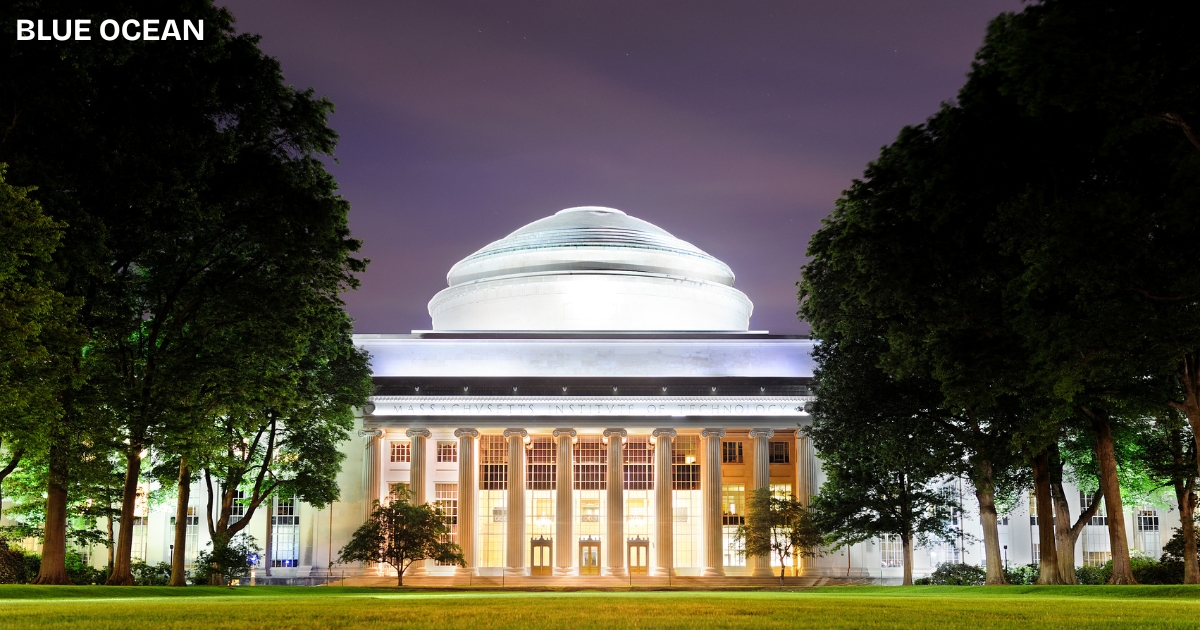
MIT evaluates applications through five categories: academics, test scores, extracurriculars, personal qualities, and financial documentation for aid purposes. None of these categories works in isolation. MIT uses a holistic review process where all five are read together by multiple admissions officers before any decision is made.
Here is the complete checklist for Indian applicants applying through the Common Application or MIT's own portal:
- School transcripts: All secondary school grades, typically Class 9 through Class 12
- Secondary school report: Completed by your school counsellor
- Two teacher evaluations: One from a Math or Science teacher, one from a Humanities or Social Science teacher
- SAT or ACT scores (required for the Class of 2029 applicants; submitted scores are evaluated)
- Five short essays plus MIT-specific supplemental questions
- Interview: Conducted by MIT Educational Counsellors, who are alumni volunteers
- Financial aid application: CSS Profile, required if applying for aid
MIT's admissions team reads every application in full. There is no GPA cutoff that auto-rejects. There is no SAT score that auto-admits. Every file goes through two independent reads before a decision is made. The checklist above is what you submit. What MIT evaluates is harder to reduce to a list.
Board Results: CBSE, ICSE, and IB Expectations
MIT has no stated minimum percentage for Indian board exams. The admitted Indian applicant profile is, however, consistently strong. CBSE students who receive offers typically score 95% or above overall, with 98-100% in Mathematics and core Science subjects.
ICSE students follow a similar pattern. IB students applying from India typically score 42-45 out of 45, with 7s in Higher Level Mathematics and Science subjects. MIT's admissions team is familiar with all three boards and evaluates grades in the context of what your specific school offers.
The phrase "evaluates in context" is not an escape clause for weaker scores. It means that if your school offers AP courses or IB Higher Level options and you chose not to take them, that is noticed. MIT wants students who took the hardest available courses and performed at the top of them.
Grade Trajectory Matters
MIT reads all four years of secondary school grades, not just Class 12. An upward trajectory, where performance strengthens through Class 11 and 12, reads positively. A downward trend in Class 12 requires a counsellor note explaining the change. Strong Class 12 midyear reports carry real weight in the Regular Decision process.
Standardised Tests: SAT, ACT, Subject Tests
MIT reinstated its SAT/ACT requirement for the Class of 2029 after a temporary test-optional period. Indian students applying in 2026 should plan to submit standardised test scores. MIT accepts both the SAT and the ACT.
The SAT score range for admitted MIT students sits between 1510 and 1580 (25th to 75th percentile). For Indian students, a score of 1550 or above is the practical target. The Math section matters more than Evidence-Based Reading and Writing for STEM-focused applicants, but both sections are evaluated. A 790-800 on Math with a 750+ on Reading/Writing is a strong MIT-ready SAT profile.
MIT discontinued SAT Subject Tests when College Board eliminated them in 2021. They are no longer submitted, required, or considered. Any guidance suggesting Subject Tests matter for MIT is outdated and should be ignored.
A 1580 on the SAT does not guarantee admission. A 1545 with an extraordinary research project will outperform a 1580 with a generic extracurricular list. Treat the SAT as a threshold to clear, not your primary differentiator. Once you reach 1540+, your time is better spent building depth in your spike than chasing additional SAT points.
Course Requirements and Preparation
MIT expects applicants to have completed four years of Mathematics through calculus, four years of Science including Physics and Chemistry, four years of English, two years of History or Social Science, and two years of a foreign language. Most Indian CBSE and ICSE students meet these requirements through their standard curriculum.
What separates competitive MIT applicants is what they do beyond the standard curriculum. Admitted MIT students from India typically show evidence of engaging with mathematics and science outside the classroom: olympiad preparation, independent study at university level, or self-directed research projects with tangible outputs.
IB students should note that MIT values Higher Level Mathematics: Analysis and Approaches over Mathematics: Applications and Interpretation for technical programs. If you are still choosing your IB subjects, take HL Math AA. It signals the level of mathematical rigour MIT expects of its students.
Research and Project Requirements
Research is not formally required for MIT admission. It is, however, present in nearly every admitted Indian student's application. MIT's culture is built around making and building. The Institute's motto is "Mens et Manus," meaning Mind and Hand. MIT values students who apply knowledge, not just accumulate it.
What qualifies as research or project work is broader than most Indian families assume. It includes formal research under a university professor, independent science fair projects, technical competitions such as IOPC or Science Olympiad, software development with real users, hardware builds documented rigorously, and mathematical problem-solving at olympiad level.
Arjun from Delhi was admitted to MIT with a ₹1.1 Cr financial aid package. His spike was original research on water purification methods that was cited in a state environmental report. The project was not conducted at a premier institution. It was conducted independently, with guidance from a local professor, over two years. What made it MIT-worthy was the rigour, the documentation, and the fact that it produced a real, cited output.
Most Indian applicants to MIT list 8-10 extracurriculars. The ones who get in usually have 3-4, but they have gone deeper than anyone else in one of them. MIT's admissions office is looking for students whose intellectual interests align with MIT's research culture, not students who are broadly accomplished.
Essay Requirements for MIT
MIT's essay requirements are among the most specific of any US university. The application includes five short essays of around 200-250 words each, plus activity descriptions. The questions ask directly about what you do for fun, a way you contribute to your community, a challenge you have faced, something you have made or built, and what you would bring to MIT's community.
The short format is deliberate. MIT wants to see how you think when forced to be concise. Generic answers that could apply to any university, descriptions of grades and test scores, and essays that summarise your resume are the most common mistakes. The essays should reveal something specific about how your mind works.
Riya from Pune was admitted to MIT with a ₹1.2 Cr financial aid package. Her application centred on a fintech application she had built to help street vendors in her city track inventory and reduce losses. The essay about what she had made described the actual technical problem, the iterations that failed, and what the final version did differently. It was specific, grounded, and unmistakably hers.
For Indian students applying through the Common App, the Common App personal statement (650 words) is separate from MIT's supplemental questions. Both require genuine attention. The Common App essay provides narrative context. The MIT supplements demonstrate fit with MIT's specific culture and values.
Interview Process
MIT's alumni interview is conducted by Educational Counsellors, volunteers who are MIT graduates. The interview is offered to most applicants and is strongly recommended. It is one of the few parts of the MIT application where a human conversation directly supplements your written file.
For Indian applicants, interviews typically happen virtually with an MIT alum based anywhere in the world. The conversation usually runs 45-60 minutes. Interviewers are not evaluating polish or formal presentation. They report back to MIT on whether you hold a genuine intellectual conversation, whether you show real curiosity, and whether your stated interests match how you actually talk about your work.
The most common mistake Indian students make in the MIT interview is treating it like a formal HR interview. Over-rehearsed, structured answers read as performance rather than personality. Go in knowing your projects deeply. Be ready to discuss what did not work. MIT interviewers respond well to intellectual honesty about failure and iteration.
Financial Documentation and Aid
MIT meets 100% of demonstrated financial need for all admitted students, including international students from India. This is not marketing language. It is the formal policy stated on MIT's Student Financial Services page.
Indian families applying for financial aid submit the CSS Profile through College Board. MIT's aid calculation uses family income, assets, and the current year's cost of attendance. The MIT cost of attendance runs approximately $85,000 per year including tuition, housing, and living expenses. For families with income below approximately $140,000 USD (roughly ₹1.2 Cr at current rates), MIT typically covers the full cost of attendance through grants and aid.
This is exactly what our profile evaluation covers. Dr. Sanjay reviews your current academic standing and gives you a specific action plan in 48 hours, including a realistic aid estimate for your family's financial profile. Get your evaluation here.
MIT is need-blind for US citizens in its admission process. For international students including Indians, MIT is need-aware, meaning financial need can be a factor in admission for a small number of borderline cases. For the vast majority of admitted Indian students, demonstrated financial need does not affect the admission outcome.
Deadlines and Application Timeline
MIT offers two application rounds: Early Action and Regular Decision. Early Action is non-binding, meaning you can apply Early Action to MIT and still apply to other universities simultaneously. The Early Action deadline is November 1, with decisions released in mid-December. Regular Decision applications are due January 1, with decisions in mid-March.
Indian students who are strong candidates should apply Early Action. MIT accepts approximately 9-10% of Early Action applicants versus roughly 3-4% of Regular Decision applicants. The difference is real and worth accounting for in your planning. Early Action applicants also receive their MIT decision before January deadlines at other universities, giving more time to make decisions.
- Early Action deadline: November 1
- Early Action decisions: Mid-December
- Regular Decision deadline: January 1
- Regular Decision decisions: Mid-March
- CSS Profile for financial aid: November 1 for Early Action, February 1 for Regular Decision
Full requirements and the application portal are available at mitadmissions.org/apply. Check the official page for any updates to deadlines or requirements for the current application cycle.
How These Requirements Translate to Admits
Students who meet every requirement on this list and still do not get admitted usually have the same problem: they look like strong students, but not like MIT students. MIT is looking for something more specific than academic excellence. It is looking for intellectual identity.
An intellectual identity at MIT means having a domain where you have gone deeper than any peer around you. Your application tells a coherent story about what you care about, how you pursue it, and why MIT is the right place to take that work further. A 1580 SAT, 98% CBSE aggregate, and a list of 12 clubs does not tell that story. A 1555 SAT, 96% CBSE aggregate, two years of independent robotics research, and essays that make the admissions reader think "this person is going to build something remarkable at MIT" does.
Our students have seen this pattern consistently. Arjun from Delhi, whose water purification research produced a state-cited report, was not the highest-scoring student from his school that year. Riya from Pune, who built a working fintech application for street vendors, did not have a perfect SAT. What both had was genuine depth in one area that made everything else in their applications coherent and credible.
For a full walkthrough of building that kind of profile over 18-24 months, read our guide on how to get into MIT from India. For a direct comparison of Harvard's requirements and evaluation process, read our guide on how to get into Harvard from India.
Frequently Asked Questions
Does MIT require SAT Subject Tests from Indian students?
MIT no longer requires or considers SAT Subject Tests. They were discontinued when College Board eliminated them in 2021. MIT is test-flexible, accepting SAT, ACT, or equivalent. For Indian students, a strong SAT (1550+) combined with excellent board results and a technical spike is the typical profile of admitted applicants. Any advice suggesting Subject Tests matter for MIT is outdated.
What is the minimum percentage in CBSE for MIT?
MIT has no minimum percentage cutoff. However, admitted Indian students typically score 95%+ in CBSE boards, often with 98-100% in Mathematics and Science subjects. MIT evaluates grades in context. What matters most is whether you took the most rigorous courses available at your school and performed at the top of them. A 93% from a highly competitive CBSE school may read differently than a 97% from a school with less academic rigour.
Does MIT require research experience from Indian students?
Research is not formally required, but it is nearly universal among admitted Indian students. MIT values students who build, experiment, and solve real problems. This can be formal research under a professor, independent projects, or technical competitions like Science Olympiad or IOPC. Formal research at a prestigious lab is not required. What matters is demonstrating genuine technical depth and the initiative to pursue it independently. The output of your work matters more than the institution where you did it.
What are MIT's English proficiency requirements for Indians?
Indian students who study in English-medium schools generally do not need TOEFL or IELTS. MIT may request proficiency documentation if your school's primary language of instruction is not English. If required, MIT looks for TOEFL 100+ or IELTS 7.5+. Most Blue Ocean students attend English-medium IB or CBSE schools, making this a non-issue in practice. If in doubt, contact MIT's international admissions office directly via mitadmissions.org/apply/process/international.
- MIT Admissions, Application Requirements: mitadmissions.org/apply
- MIT International Student Admissions: mitadmissions.org/apply/process/international
- MIT Student Financial Services: sfs.mit.edu
- MIT Cost of Attendance: sfs.mit.edu/undergraduate-students/the-cost-of-attendance
- College Board SAT Suite: satsuite.collegeboard.org/sat
- Common Application: commonapp.org