Understanding how to get into Harvard Business School from India requires accepting one uncomfortable truth first: the overall HBS acceptance rate of roughly 12% does not apply to you. India is one of HBS's largest international applicant pools, and within that pool, the effective acceptance rate is meaningfully lower. You are not competing against the world. You are competing against a highly credentialed, well-coached cohort of Indian professionals who all have strong GPAs, strong GMAT scores, and strong employers on their CVs.
That is the problem. It is also the opportunity. The moment you understand what actually differentiates admits from rejects in the Indian pool, the path forward becomes concrete. This guide covers real HBS admissions data, the profiles of Indian applicants who got in, and the strategic gaps most Indian MBA applicants never address. For broader context on US university admissions from India, read our complete guide to top US universities from India.
HBS Acceptance Rate: The India Reality
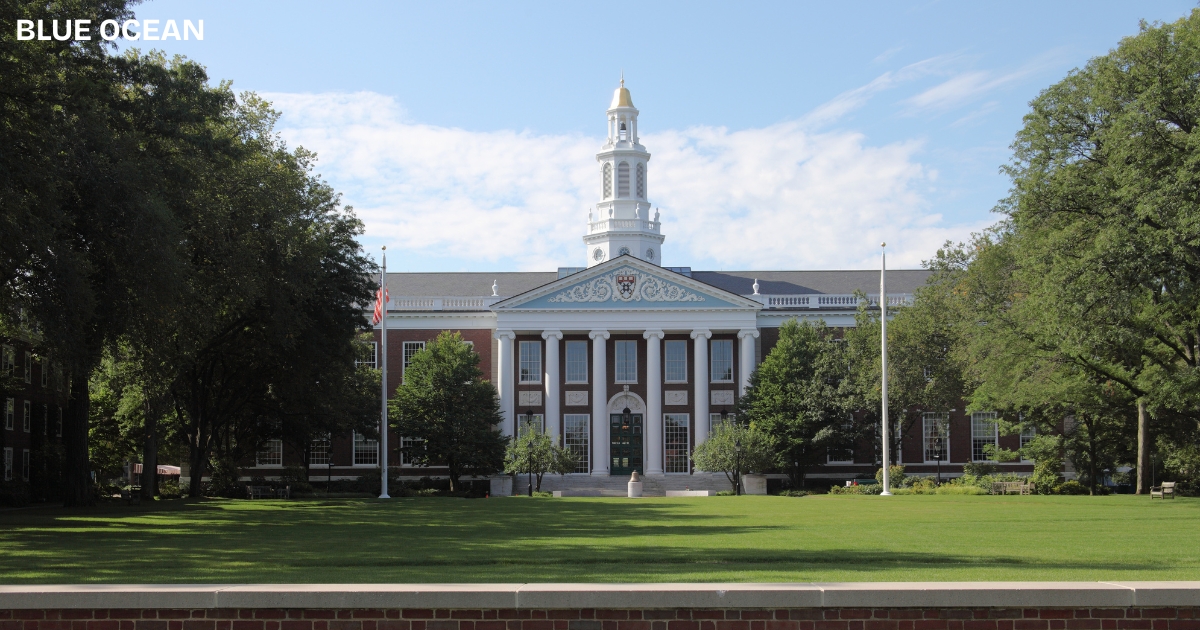
HBS receives approximately 9,000 to 10,000 applications each year for a class of around 930 students. The official acceptance rate sits near 12%. For Indian applicants, the number that matters is not the headline rate. It is the yield within the Indian pool.
HBS aims to build a geographically diverse class. That means there is a soft cap on how many students from any single country are admitted in a given year. India consistently sends one of the largest applicant volumes globally, which concentrates the competition significantly. An Indian applicant is evaluated primarily against other Indian applicants, not against the full global pool.
The profile that floods this pool is specific: IIT or top IIM undergraduate degree, two to four years at McKinsey, BCG, or a top investment bank, GMAT above 740. That profile is no longer a differentiator. It is table stakes. HBS adcoms see dozens of applicants matching this description in every cycle. The ones who get in have something beyond it.
The IIT-then-consulting-then-HBS narrative is so common in the Indian applicant pool that it has stopped being differentiated. HBS adcoms recognize this pattern immediately. Without a genuine twist, whether a founding story, an unusual industry pivot, or a measurable social impact arc, this profile blends into the background regardless of how strong the individual components are.
What HBS Looks For in Indian Applicants
HBS runs a case-method curriculum, and the admissions team selects for people who will contribute meaningfully to that classroom. The question they are asking is not "Is this person qualified?" It is "Will this person make our classroom more interesting?"
HBS evaluates applicants across three dimensions. The first is habit of leadership: Have you taken ownership in your professional and personal life? Not just managed projects, but actually led people through ambiguity and consequential decisions? The second is analytical aptitude: Can you handle the intellectual rigour of 500 cases in two years? The third is engaged community citizenship: Will you contribute to HBS beyond your own MBA goals?
For Indian applicants specifically, the leadership dimension tends to be the most underdeveloped in applications, even when the underlying experience is genuinely strong. Many Indian professionals have led significant work. They just do not write about it in terms of the decisions they made, the trade-offs they faced, and the outcomes they produced. They describe the process. They do not articulate the impact.
HBS is not looking for the most impressive resume. They are looking for the person in the room who will push the class to think differently. Your job in the application is to show them that person, not summarize your LinkedIn profile.
The GMAT/GRE Question
Target Score for Indian Applicants
The median GMAT for the HBS Class of 2026 is 740. For Indian applicants, the practical target is 750 or above. This is not an official HBS requirement. It reflects the reality of the competitive pool you are entering. When the average Indian applicant in that pool scores 740 to 750, a 720 puts you at a disadvantage before a single other element of your application is evaluated.
That said, the GMAT is not the whole story. HBS has admitted Indian applicants with scores in the 700 to 720 range when the rest of the profile was genuinely exceptional. A founding story that demonstrably changed an industry, a leadership arc that is specific and unusual, or a social impact narrative that is both credible and significant can offset a below-median score. What a below-median score cannot offset is weakness everywhere else. Use GMAC's official GMAT preparation platform for practice materials and score reporting.
GMAT vs GRE: Which Is Better for HBS?
HBS accepts both the GMAT and the GRE. There is no officially stated preference. In practice, the GMAT remains the dominant choice among HBS admits, and for Indian applicants the GMAT tends to be the stronger signal given how calibrated the Indian applicant pool is to this test specifically.
The GRE makes sense if you are hedging across both MBA programs and other graduate school options, or if your GRE performance is genuinely stronger after practice. If you are focused exclusively on top MBA programs, put your energy into the GMAT and aim for 750 or above. Splitting preparation time between both tests without a strategic reason tends to produce weaker results on both.
Work Experience: Quality Over Prestige
HBS's median work experience at matriculation is approximately five years post-undergraduate. The typical range is four to six years. Below three years is uncommon. Above eight years begins to raise questions about timing, specifically why this program now rather than earlier.
The type of experience matters far more than the employer name. HBS has admitted applicants from startups, NGOs, family businesses, and government roles alongside the expected Goldman Sachs and McKinsey alumni. What every successful applicant shares is a clear arc: they joined an organization, they changed something meaningful, and they can articulate specifically what changed and why it mattered.
Indian applicants from consulting and banking often struggle most with this. The work is genuinely rigorous, but the client service model can make individual ownership ambiguous. If you are coming from a consulting background, identify the specific moments where you made a consequential decision, not just recommended one. "I led the team that recommended a market entry strategy" is not the same as "I identified the market signal my client had missed, built the internal case over three months, and the company entered that market and generated $40M in year-one revenue." The second version is an HBS application. The first is a consulting resume bullet.
The HBS Essay: One Question, One Shot
HBS asks one essay question, deliberately open-ended: "As we review your application, what more would you like us to know as we consider your candidacy for the HBS MBA program?" You have 900 words.
This openness is itself a test. Most applicants respond by trying to cover everything: childhood, career, goals, values, why HBS. The result is a 900-word summary that tells the reader nothing specific about who this person actually is. HBS adcoms read thousands of these summaries. They remember the essays that commit to a specific angle and go deep into it.
The best HBS essays from Indian applicants do one of three things. They tell a story that is genuinely unusual in the Indian MBA context, something that immediately signals this is not the standard IIT-consulting profile. They articulate a professional insight that only someone with this specific background could have arrived at, demonstrating analytical depth and original thinking. Or they reveal a personal dimension that adds real texture to an otherwise strong but conventional resume.
What the essay should not do is restate the resume in prose form. HBS can read your resume. They are asking what they would not know from reading it. Answer that question directly. Check the HBS application process page for current essay prompts and round deadlines before you begin drafting.
The most effective move an Indian applicant can make with the HBS essay is resisting the urge to be comprehensive. Pick one thread. Pull it hard. If the essay makes the reader feel they now understand something about you that no other document in the application communicates, it is working. If it reads like a well-written career summary, start over.
Letters of Recommendation for HBS
HBS requires two letters of recommendation. Both should come from people who have directly supervised your professional work. HBS explicitly asks for supervisors, not mentors, clients, or professors, unless there is a specific and compelling reason to deviate from that structure.
The quality of an HBS recommendation is determined by its specificity. A letter from a McKinsey partner that says "this person is in the top 5% of analysts I have worked with" is less useful than a letter from a startup founder that says "she identified a customer churn pattern our entire analytics team had missed, built a response strategy in three weeks, and reduced monthly churn by 18%. I had never seen a hire move that fast from problem identification to execution." Specific examples, specific outcomes, specific qualities demonstrated through specific situations.
Choose recommenders who know your work at a granular level over recommenders with impressive titles but broad relationships with you. A manager who worked closely alongside you on a single high-stakes project for three months will write a more useful letter than a senior partner who oversaw fifty analysts including you for two years.
The HBS Interview: What to Expect
HBS conducts interviews by invitation only. Roughly 20% of applicants are invited to interview. The interview is typically conducted by a second-year HBS student, not an admissions officer, and runs approximately 30 minutes. It is behavioral and conversational, not a case interview.
Common interview themes: Why HBS specifically, and not Wharton or Stanford GSB? Walk me through a leadership challenge where you failed or made a significant mistake. What will you contribute to HBS's classroom? What are your post-MBA goals, and why does HBS specifically position you to get there?
For Indian applicants, the "Why HBS" question deserves particular attention. A generic answer about case method, alumni network, and brand recognition does not differentiate you. The strongest answers connect specific HBS resources, professors, research centers, or student clubs to a specific gap in your background or a specific goal you are building toward. This requires actual research, not just awareness of HBS's reputation.
The interview is also where your essay's central thread gets tested directly. If your essay is built around an entrepreneurial insight, expect the interviewer to probe that insight. If your essay covers a leadership failure and what changed afterward, be ready to go deeper on both the failure and the genuine behavioral shift that followed.
Financial Aid and Scholarships at HBS
The total cost of attendance at HBS runs approximately $115,000 per year, making the two-year MBA a $230,000 investment before living expenses. For Indian applicants, this figure currently exceeds Rs. 1.9 crore per year at prevailing exchange rates.
About 50% of HBS students receive some form of financial aid. HBS offers need-based grants through its own endowment, and the need calculation takes the INR-USD purchasing power gap into account for international applicants. Indian students with demonstrated financial need often receive more substantial support than the headline tuition figure would suggest. HBS also participates in external fellowship programs including several that target students from emerging markets.
For need-based aid, the application requires detailed disclosure of your family's financial situation. Do not assume you will not qualify because your family has a reasonable income by Indian standards. The HBS calculation compares your resources to the actual cost of living in Boston, denominated in USD. Many Indian families who are upper-middle-class by Indian measures qualify for meaningful need-based support at HBS. Review Harvard's financial aid philosophy, then check the HBS-specific MBA aid pages for program-level details.
This is exactly what our profile evaluation covers. Dr. Sanjay reviews your current standing and gives you a specific action plan, including realistic financial aid expectations based on your family profile, in 48 hours. Get your MBA profile evaluation here.
Common Mistakes Indian MBA Applicants Make
The most damaging mistake is positioning. Specifically, framing your profile around prestige markers rather than impact narratives. "IIT Bombay, McKinsey, promoted to engagement manager in 18 months" is a prestige summary. It tells HBS you are qualified. It does not tell HBS you are interesting. Every other strong Indian applicant has a similar prestige summary. The real positioning question is: What did you change, and why should HBS care?
The second mistake is underinvesting in the essay. Indian applicants tend to be technically strong and narrative-weak. Years of engineering education and case-driven consulting work build analytical precision but do not build the skill of telling a specific, textured personal story. Most Indian MBA essay drafts read like well-structured memos, not like conversations with someone who has a distinct point of view on the world. HBS wants the latter.
The third mistake is choosing recommenders for their titles rather than their knowledge of your work. A recommendation from someone who cannot recall specific details of your daily contributions is a wasted slot, regardless of how senior that person is.
The fourth mistake is applying in Round 3. HBS fills most of its class in Rounds 1 and 2. Round 3 exists, but the competition for remaining spots is disproportionately harder. If your application is ready, submit in Round 1 or early Round 2. The HBS MBA admissions page publishes deadline dates for each round each year.
How Blue Ocean's MBA Applicants Got Into HBS
Nikhil from Mumbai is the clearest example of what differentiation looks like in practice. His background on paper was strong but conventional for the Indian MBA pool: undergraduate engineering, three years at McKinsey. The difference was what he built after consulting. He co-founded an agri-tech startup that worked directly with smallholder farmers in Maharashtra and Gujarat, deploying soil analytics tools that reduced input costs for participating farmers by 22%. When Nikhil applied to HBS, his McKinsey years were part of the story. The startup was the story. HBS admitted him. The profile that stands out is not the one with the best consulting brand. It is the one where the professional arc adds up to something specific and real.
For comparison: Tathagata from Pune, who had an equally strong academic foundation, built his case around a specific fintech angle for Cornell Tech's MBA. His application demonstrated a precise connection between his professional work in financial technology and exactly why Cornell's tech-and-business model was the right next step, not just a prestigious option. The lesson from both profiles is the same: clarity of fit, not prestige of background, is what converts a competitive applicant into an admit.
Sameer from Bangalore pushed the entrepreneurial angle even further, building a D2C brand to meaningful scale before applying to Wharton, where he received a full scholarship. His profile demonstrates something directly relevant to any Indian entrepreneur targeting top MBA programs: admissions committees at all elite programs are actively looking for founders who can bring real business-building experience into their classrooms. See Wharton's admissions criteria and Stanford GSB's admission process for how the other top programs frame this. If you have built something, lead with it. Do not bury it beneath corporate credentials.
Blue Ocean's MBA applicants across these profiles share one thing: they did not apply with the profile they had. They built the profile their target programs needed to see, 12 to 18 months before submitting an application. That timeline is what makes the difference between a strong application and an admitted one. Our MBA profile evaluation is the starting point for building that plan. Dr. Sanjay has guided 500+ students to Harvard, MIT, Stanford, Oxford, Cambridge, and top MBA programs, with a Rs. 1 crore average scholarship secured across the cohort.
Frequently Asked Questions
What GMAT score do I need for Harvard Business School?
The median GMAT for HBS is 740, but Indian applicants often need higher (750+) because the Indian applicant pool is intensely competitive. That said, HBS has admitted applicants with 700-720 who had exceptional work experience and impact stories. A 760+ with a weak profile will not get you in. A 730 with a founding story that changed an industry might.
How many years of work experience do I need for HBS?
HBS's sweet spot is 4-6 years of post-undergraduate work experience. The median is about 5 years. They value trajectory and impact more than years. An IIM graduate who spent 3 years at McKinsey but led a meaningful pro-bono project has a stronger case than someone with 7 years at a major company doing routine work. Show what you changed, not how long you were there.
Is it harder for Indian students to get into HBS?
India is one of the largest applicant pools to HBS, which makes it competitive. HBS aims for geographic diversity in each class, so being from India means you are compared primarily against other Indian applicants. To stand out, you need a differentiated story. The IIT-then-consulting-then-HBS path is the most common Indian narrative. The admits who break through have a twist: an unusual industry, a founding experience, or a social impact angle.
Does HBS offer scholarships to Indian students?
HBS offers need-based financial aid and some merit fellowships. About 50% of HBS students receive financial aid. For Indian students, need-based aid can be substantial given the INR-USD gap. The total cost of HBS is approximately $115,000 per year, but many Indian students pay significantly less after aid. HBS also participates in external fellowship programs targeting students from emerging markets.
- HBS MBA Admissions: hbs.edu/mba/admissions
- HBS Application Process & Deadlines: hbs.edu/mba/admissions/application-process
- Harvard Financial Aid Philosophy: college.harvard.edu/financial-aid
- GMAC Official GMAT Resources: mba.com
- Stanford GSB MBA Admissions: gsb.stanford.edu/programs/mba/admission
- Wharton MBA Admissions: mba.wharton.upenn.edu/admissions
- Institute of International Education, Open Doors Data: iie.org