UK university admissions for Indian students has changed significantly over the past decade. What was once seen as a backup option after US rejections is now a deliberate first choice for an increasing number of high-achieving Indian students who want world-class education at a lower total cost, with a faster path to employment through the UK Graduate Route visa.
This guide covers everything Indian students need to understand about the UK admissions system — the UCAS process, how Indian qualifications are assessed, what the top UK universities actually look for, and how the UK compares to the US as a destination. Individual deep-dive guides for specific universities are linked throughout.
Why Indian Students Are Choosing the UK
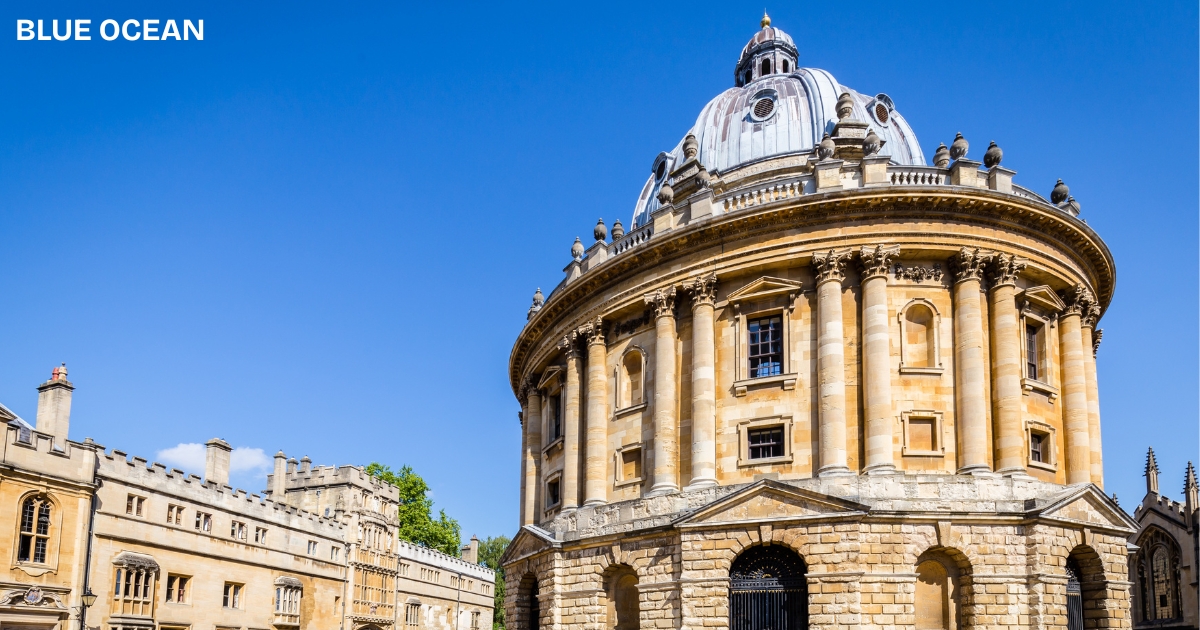
Three structural factors have made the UK increasingly attractive to Indian students:
Shorter degree duration. UK undergraduate degrees are three years, not four. For a family investing ₹80-150 lakh in overseas education, one fewer year of tuition and living expenses is a material difference. The total cost of a UK degree at a top university is often lower than an equivalent US degree, even when per-year tuition fees are similar.
The UK Graduate Route visa. International students who complete a UK degree can remain in the UK and work for two years (three years for PhD graduates) on the Graduate Route visa. This was introduced in 2021 and has made the UK significantly more competitive as a destination. It gives Indian graduates access to the UK job market without needing immediate employer sponsorship.
Subject specialisation from day one. UK degrees require you to choose your subject before you arrive and commit to it throughout your degree. This is a constraint for students who are still exploring, but it is a significant advantage for students who know exactly what they want to study. Three focused years in a single subject produces a depth of expertise that four-year generalist degrees at many US institutions do not.
The UCAS System: How UK Applications Work
All UK university applications are submitted through UCAS — the Universities and Colleges Admissions Service. Unlike the US system, which allows you to submit separate applications to each university, UCAS is a single application sent to up to five universities simultaneously.
Key features of the UCAS system:
- Single personal statement: You write one 4,000-character personal statement that goes to all five of your university choices. This is very different from the US Common App, which allows multiple supplemental essays targeted at individual universities. Your UCAS personal statement must work for all your choices simultaneously.
- Subject-specific application: You apply to a specific course at each university, not to the university as a whole. This means you must have decided on your subject before you apply.
- Two deadlines: Oxford and Cambridge require applications by October 15. All other UK universities have a January deadline (typically January 31). You can apply to Oxford or Cambridge but not both in the same year.
- Predicted grades: Because Indian students apply in their penultimate year (before Class 12 exams), UK universities assess applications based on predicted grades provided by your school. Your school teacher or principal writes a reference that includes predicted Class 12 scores. These predicted grades carry significant weight.
The Top UK Universities for Indian Students
India sends students to a wide range of UK universities, but the most competitive and most sought-after destinations fall into a clear hierarchy:
Oxbridge: Oxford and Cambridge
Oxford and Cambridge are in a category of their own in the UK. Both have overall offer rates around 17-21%, both require subject-specific admissions tests, and both conduct individual interviews with shortlisted candidates. The distinction between them matters for how you apply — Oxford tends to value depth and single-subject focus, while Cambridge's supervision system rewards students who can debate ideas in real time. For detailed guidance on each:
- How to get into Oxford from India: strategy and profile-building
- Oxford admission process: step-by-step from UCAS to conditional offer
- Cambridge University admissions for Indian students
The Russell Group: LSE, Imperial, UCL, and Others
Below Oxbridge sits the Russell Group — 24 research-intensive universities that include the London School of Economics (LSE), Imperial College London, University College London (UCL), King's College London, University of Edinburgh, University of Manchester, and others. These universities are highly regarded globally and offer genuine alternatives to Oxbridge for specific subjects.
LSE is the strongest option in the UK for Economics, Politics, and Social Sciences. Imperial is the top choice for Engineering and Natural Sciences outside Oxbridge. UCL has strong programmes across most disciplines. Edinburgh is particularly strong for Medicine and Computer Science.
How to Get Into Oxford from India
Strategy, profile-building, and what Oxford actually looks for
Oxford Admission Process: Step-by-Step
UCAS timeline, tests, interviews, and conditional offers
Cambridge Admissions for Indian Students
Supervisions, COPA, Gates Scholarship, and interview prep
Study Abroad Consultants: How to Choose
What separates genuinely useful guidance from generic advice
How UK Universities Assess Indian Qualifications
UK universities accept the three main qualifications available to Indian students, with similar requirements across the board:
| Qualification | Typical Oxbridge benchmark | Typical Russell Group benchmark | Key notes |
|---|---|---|---|
| CBSE | 95%+ aggregate, high subject scores | 90-95%+ depending on course | Individual subject scores matter more than aggregate |
| ISC | 95%+ aggregate, high subject scores | 88-92%+ depending on course | English medium exemption usually applies |
| IB | 40-42 points, 7s at HL in relevant subjects | 36-40 points, strong HL scores | Extended essay demonstrates the independent thinking UK universities value |
For Indian students: the specific subjects you are studying matter as much as your grades. An Economics applicant needs strong Mathematics. A Law applicant needs strong English. A Medicine applicant needs Biology and Chemistry. UK universities will specify subject requirements on their admissions pages — check these before finalising your A-Level or IB choices.
UK vs US: The Real Comparison for Indian Students
Most Indian students considering the UK are also looking at the US. The two systems are genuinely different — not better or worse, but different in ways that should influence which you prioritise based on your profile and goals.
| Factor | UK Universities | US Universities |
|---|---|---|
| Degree duration | 3 years (4 for some courses) | 4 years |
| Subject choice | Committed at application, no switching | Can change major; explore broadly |
| Application system | UCAS — one application, 5 universities, one personal statement | Common App — separate essays for each university |
| Merit scholarships | Very limited for international students | Substantial at many universities (₹50L-1.5Cr) |
| Post-study work | Graduate Route: 2 years without sponsorship | OPT: 1-3 years (STEM extension available) |
| Teaching style | Small group tutorials, seminar-based | Lecture-based, broader curriculum |
| Research access | Strong at Oxbridge and Russell Group | Extensive at top 20-30 US universities |
The right choice depends on your subject, your financial situation, your learning style, and your career goals. Students who know their subject and want to go deep in it quickly often prefer the UK. Students who are still exploring or who want access to large US scholarship offers often find the US a better fit.
Randitya from Gurgaon received admissions to Manchester and Durham, along with placements at UIUC, UMass (as a Presidential Scholar), Virginia Tech, and six other universities — securing over ₹1.2 crore in total scholarships across the US and UK. His profile showcased an internship as the youngest worker in his field, combined with genuine emotional storytelling about why the subject mattered to him. That dual approach — professional credibility plus authentic voice — worked across both systems simultaneously.
The UCAS Personal Statement: What Indian Students Get Wrong
The single biggest mistake Indian students make with UK applications is writing a personal statement that reads like a US Common App essay. The two are not interchangeable. The UCAS personal statement is 4,000 characters — about 500 words — and it should be almost entirely about your academic subject.
The UCAS personal statement is not a personal story, a list of extracurriculars, or a letter of intent. It is an academic statement that shows you have engaged with your subject beyond the school syllabus. UK admissions tutors are asking: does this student think about this subject seriously, outside of class? The personal statement is your evidence.
Concretely: your UCAS personal statement should reference specific books, papers, or ideas in your subject that you have engaged with independently. It should discuss what you actually think about those ideas — not just that you read them. It should demonstrate why you want to study this specific subject at university level, grounded in intellectual engagement rather than career aspirations.
What to avoid: opening with an anecdote about your childhood, listing extracurricular achievements without connecting them to your academic subject, vague statements about passion or curiosity, and anything that sounds like you are trying to sound impressive rather than genuinely communicating your intellectual interests.
Admissions Tests: What Indian Students Need to Know
Oxford and Cambridge both require subject-specific admissions tests for most courses. These tests are taken in October or early November, after the UCAS deadline. They are used to differentiate between applicants who all have near-perfect predicted grades.
Registration for admissions tests has its own deadline, which often comes before or around the UCAS deadline — sometimes as early as September. Indian students should confirm the test requirements for their specific course and register well in advance. The British Council operates test centres in major Indian cities.
Key tests by subject area:
- Mathematics: MAT (Oxford), CTMUA or TMUA (Cambridge)
- Engineering: PAT (Oxford), ENGAA (Cambridge)
- Natural Sciences: NSAA (Cambridge)
- Law: LNAT (both Oxford and Cambridge, and other UK law schools)
- Medicine: Check current requirements — testing formats have changed at multiple institutions
- History: HAT (Oxford)
- English: ELAT (Oxford)
- PPE/Humanities: TSA (Oxford)
Ready to Start Your UK University Application?
The October 15 deadline comes faster than most students expect. The personal statement, admissions test preparation, and grade requirements all need to be in place before that date. Dr. Sanjay reviews your profile and tells you which UK universities are realistic targets, and what you need to do to reach them.
Get a Free Profile EvaluationScholarships for Indian Students at UK Universities
UK universities offer significantly fewer merit scholarships for international students than US institutions. This is a genuine difference — do not expect the ₹70-150 lakh scholarship packages that top US universities offer. However, there are notable exceptions and external funding sources worth knowing about:
- Reach Oxford Scholarship: Covers full tuition, accommodation, and a living allowance for students from countries with limited higher education access. Eligibility criteria are strict — check the Oxford admissions website for current requirements.
- Gates Cambridge Scholarship: For postgraduate students only. Covers full costs for a Masters or PhD at Cambridge. Approximately 80 international scholarships awarded annually. Indian students are eligible and regularly awarded. Selection requires demonstrated academic excellence, leadership, and commitment to improving others' lives.
- Chevening Scholarship: UK government-funded scholarship for Masters study at any UK university. Open to Indian students with two years of work experience. Around 50-60 Chevening scholarships are awarded to Indian students annually.
- Commonwealth Scholarships: Available for postgraduate study for students from Commonwealth countries including India. Funded by the UK government through the Commonwealth Scholarship Commission.
- University-specific awards: LSE, Imperial, UCL, and other universities offer limited scholarships for exceptional international students. These are typically worth £5,000-15,000 and are awarded automatically based on academic performance, not through a separate application.
Anushka from Delhi was admitted to Cambridge and also secured admissions at top US institutions, with a combined scholarship of ₹88 lakh. Her defining characteristic was real professional exposure — actual work at a law firm practising criminal law, not just interest in law as a subject. That specificity made every part of her application, from personal statement to interview, land differently than a profile built on academic achievements alone.
Working in the UK After Graduation
The UK Graduate Route visa allows international students who have completed a UK undergraduate or postgraduate degree to stay in the UK for two years (three years for PhD graduates) and work in any role without needing employer sponsorship. This is a significant advantage over the pre-2021 UK visa system and makes the UK competitive with the US OPT programme.
Indian graduates from top UK universities who want to stay in the UK beyond the two-year Graduate Route can apply for a Skilled Worker visa, which requires employer sponsorship. UK employers in finance, consulting, technology, and law regularly sponsor Indian graduates from top universities.
For Indian students who want to return to India after graduation, UK credentials carry strong recognition in the Indian market, particularly at major consulting firms, investment banks, and multinationals with UK operations.
How to Apply: A Practical Checklist
For Indian students planning a UK university application, here is a sequenced action list:
- Choose your subject. UK applications require subject commitment from the start. Confirm your subject before you do anything else.
- Research course requirements. Check the specific entry requirements for your subject at each target university on the UCAS website and individual university admissions pages.
- Confirm admissions test requirements. If applying to Oxford or Cambridge, identify the test required for your course and note the registration deadline — often September or early October.
- Prepare your predicted grades. Work with your school to confirm what predicted grades will appear on your UCAS reference. These need to meet the entry requirements of your target universities.
- Write your personal statement. Focus on academic engagement with your subject. Get feedback from teachers and mentors who understand the UCAS personal statement format — not from people familiar only with the US Common App approach.
- Submit by October 15 (Oxbridge) or January 31 (all others). Build in buffer — do not leave submission to the deadline date.
- Prepare for interviews. If applying to Oxford or Cambridge, practise thinking aloud through unfamiliar academic problems. Interview preparation should start as soon as you submit your UCAS application.
Frequently Asked Questions
Can Indian students apply to UK universities directly?
Yes. Indian students apply to UK universities through UCAS (Universities and Colleges Admissions Service). You can apply to up to five universities in a single UCAS application. Oxford and Cambridge have an earlier deadline of October 15, while most other UK universities have a January deadline. You cannot apply to both Oxford and Cambridge in the same year.
What qualifications do UK universities accept from India?
UK universities accept CBSE, ISC, and IB qualifications from Indian students. For top universities like Oxford, Cambridge, LSE, and Imperial, the typical benchmark is 95%+ aggregate for CBSE and ISC students, or 38-42 points for IB students. Subject-specific requirements depend on the course — individual subject scores in relevant subjects matter as much as aggregate performance.
Is studying in the UK more affordable than the US for Indian students?
UK undergraduate degrees are typically three years rather than four, which reduces total tuition and living costs. Annual tuition fees at top UK universities for international students range from £25,000 to £45,000. UK universities do not offer merit scholarships at the scale of US institutions, but the shorter degree duration often makes the total cost comparable or lower than a US degree, particularly when accounting for the absence of merit aid at most UK universities.
Can Indian students work in the UK after graduating?
Yes. The UK Graduate Route visa allows international students who have completed a UK degree to stay and work in the UK for two years (three years for PhD graduates). This gives Indian graduates access to the UK job market without needing a sponsored work visa immediately after graduation. Beyond the Graduate Route, Indian graduates from top UK universities can apply for Skilled Worker visas with employer sponsorship.