The Oxford University admission process has a reputation for being opaque. Students often know that Oxford is selective and that it involves an interview, but they have little visibility into what actually happens between submitting a UCAS application and receiving a decision. This guide maps the entire process — from the October 15 deadline through conditional offers — so Indian students know exactly what to expect at each stage.
What follows is a stage-by-stage walkthrough covering deadlines, documents, admissions tests, and how decisions are made. If you want the strategic side of how to build a competitive Oxford application, read our companion guide: How to Get Into Oxford from India. This post focuses on the process itself.
Why the Oxford Process Is Different from Most Universities
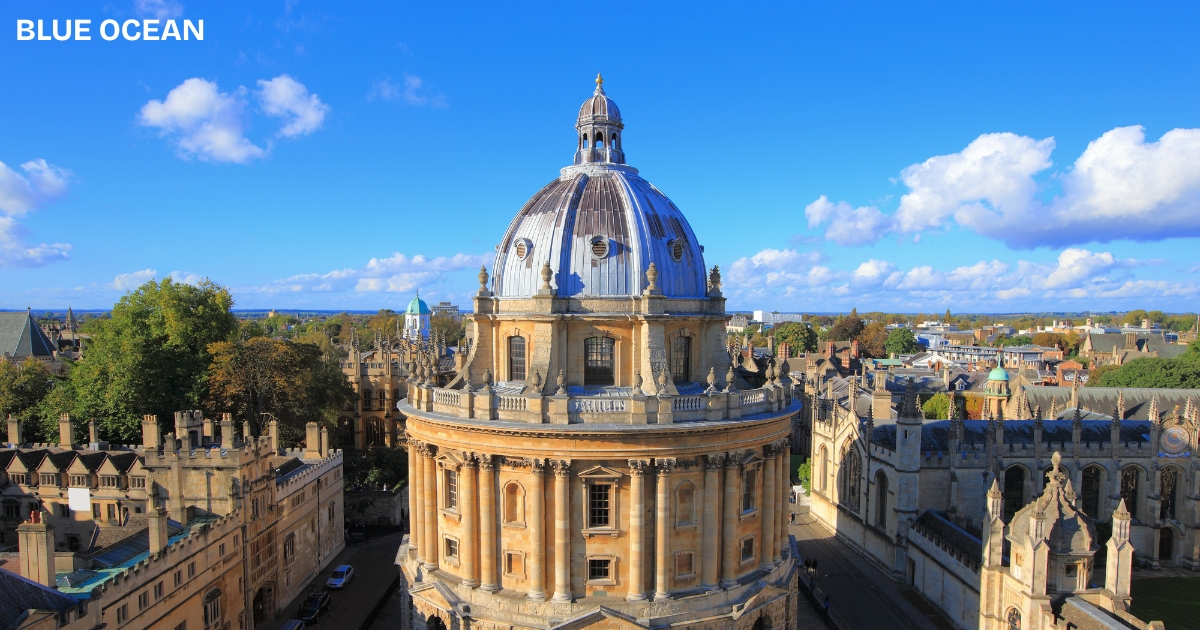
Most UK universities use a relatively straightforward UCAS process: submit an application, receive an offer or rejection, accept. Oxford adds two major layers on top of this: subject-specific admissions tests and college-based interviews. Both are used to shortlist and differentiate applicants, because Oxford receives far more applications from students with near-perfect predicted grades than it can admit.
The result is a multi-stage process spread across roughly six months, from initial application in September through final decisions in January. Each stage has a specific purpose and different implications for your candidacy.
The Complete Timeline: Stage by Stage
The Oxford admission process follows a fixed annual schedule. Here is the complete timeline for a student applying to begin in October of the following year:
- September: UCAS application opens. Begin drafting your personal statement. Register for required admissions tests (some have early registration deadlines).
- October 15: UCAS application deadline for Oxford (and Cambridge). This is firm — Oxford does not accept late applications from any applicant, domestic or international.
- Late October / early November: Admissions tests take place. Tests vary by course (details below).
- Mid-November: Oxford reviews applications and test results together to shortlist interview candidates. You will receive notification of whether you have been shortlisted.
- December: Interviews take place — typically held over one to three days. International students (including those from India) interview online via video call.
- January: Oxford releases decisions. You receive either a conditional offer, a rejection, or (in a small number of cases) an offer from a different college than the one you applied to.
- May / June: You receive your actual exam results (A-Levels, IB, or Indian board results).
- August / September: Oxford confirms your place if you have met the conditions of your offer, or withdraws it if you have not.
Stage 1 — The UCAS Application
Your UCAS application is the foundation of everything. Oxford receives your full UCAS application, which includes your personal statement, academic transcripts, and a reference from your school. Unlike US applications, there is no activity list or additional essays submitted directly to Oxford at this stage. Your personal statement carries significant weight.
The UCAS personal statement is 4,000 characters — approximately 500 words. This is much shorter than the Common App personal essay, and it serves a fundamentally different purpose. Where the Common App essay is often used to share your personality or story, the Oxford personal statement should be almost entirely about your academic engagement with your subject.
Oxford's personal statement is 4,000 characters (about 500 words). Unlike the Common App essay, it must be almost entirely about your academic subject. Admissions tutors want to see evidence that you have read beyond your school syllabus, engaged critically with ideas, and developed genuine curiosity about the discipline — not a list of extracurriculars or a personal origin story.
Concrete things to include in an Oxford personal statement: specific books or papers you have read and what you thought about them, a concept or problem in your subject that you have explored independently, any relevant academic projects, competitions, or research, and why you want to study this particular subject at university level. What to avoid: generic statements about passion, lists of achievements without intellectual substance, and anything that reads like a CV rather than a piece of academic writing.
For Indian students sitting ISC, CBSE, or IB boards, Oxford will also consider your predicted grades as stated by your school on the UCAS application. These predicted grades matter — they are one signal Oxford uses when shortlisting for interview.
Stage 2 — Subject-Specific Admissions Tests
Most Oxford courses require a subject-specific admissions test taken in late October or early November, around two weeks after the UCAS deadline. These tests are taken at authorised test centres or, for some, online from home. Indian students typically take tests at British Council centres or authorised schools.
The most common Oxford admissions tests include:
- MAT (Mathematics Admissions Test): Required for Mathematics, Computer Science, and related courses.
- PAT (Physics Aptitude Test): Required for Physics and Engineering Science.
- TSA (Thinking Skills Assessment): Required for PPE, Philosophy and Linguistics, and some other humanities courses.
- LNAT (Law National Aptitude Test): Required for Law. This is shared with other universities, and you register directly through the LNAT website.
- BMAT (Biomedical Admissions Test): Required for Medicine. Note: BMAT has been discontinued and replaced by the UCAT for most medical schools, but check current requirements for Oxford Medicine specifically.
- HAT (History Aptitude Test): Required for History and joint History courses.
- ELAT (English Literature Admissions Test): Required for English Literature.
Test registration often has a separate deadline that comes before or around the UCAS deadline — sometimes as early as September. Indian students should confirm the registration deadline for their specific test well in advance. Missing the registration window means you cannot sit the test, which effectively removes you from the Oxford process for that year.
Oxford uses admissions test scores alongside your UCAS application to decide who gets shortlisted for interview. A strong predicted grade alone is not sufficient — your test performance matters significantly at this stage.
Stage 3 — Shortlisting for Interview
After the UCAS deadline and test results, individual Oxford colleges review applications for students who applied to them. Oxford's admissions process is college-based: you apply to a specific college (or you can make an open application and be assigned to a college), and that college's tutors assess your application.
The shortlisting decision considers your personal statement, academic performance and predicted grades, admissions test score, and school reference. Roughly 40-50% of applicants are shortlisted for interview. Being shortlisted does not mean you have been offered a place — it means your application has passed the first filter and you will be evaluated in person (or by video).
If you are not shortlisted, you will be informed by mid-November. If you are shortlisted, you will receive details of your interview schedule in December.
Stage 4 — The Oxford Interview
The Oxford interview is the part of the process that Indian students most frequently misunderstand or underprepare for. It is not a test of how much you already know. It is a test of how you think through new material in your subject area — in real time, with a tutor who is actively probing your reasoning.
Most shortlisted candidates have two or three separate interviews, each with a different tutor. Interviews last 20 to 30 minutes each and are focused entirely on your subject. You might be given a passage to read and asked to discuss it, presented with a mathematical problem and asked to work through it aloud, or shown a piece of evidence and asked to analyse it. The format depends on your subject.
"A conditional offer from Oxford is not an acceptance. It means Oxford wants you — but it wants the version of you that meets your grade conditions. The offer letter spells out exactly what you need to achieve. The work is not done until you have your results."
International students, including those from India, interview online. Oxford provides technical guidance and ensures the format is equivalent to in-person interviews. The content and assessment criteria are identical.
Preparation for the Oxford interview should focus on practising thinking aloud through unfamiliar problems in your subject — not on memorising facts or rehearsing answers to common questions. Tutors are specifically trained to move past prepared answers and into genuinely exploratory territory.
Stage 5 — Conditional Offers and What They Mean
Oxford releases decisions in early January. You will receive one of three outcomes: a conditional offer, a rejection, or (occasionally) a pooled offer from a different college if your application was strong but your original college had limited places.
A conditional offer specifies exactly what grades you need to achieve to secure your place. For A-Level students, Oxford typically requires A*AA or A*A*A depending on the course. For Indian students on the ISC or CBSE board, the equivalent is generally 95%+ aggregate in relevant subjects in Class 12, though the offer letter will state the specific requirement.
Meeting your conditions is not negotiable. Oxford does not routinely admit students who narrowly miss their conditions — the process for requesting reconsideration is limited. This is why Indian students who receive conditional offers from Oxford must treat their Class 12 board exams as a critical milestone, not an afterthought.
Ananya from Mumbai was admitted to Warwick and KCL after a rigorous application process that showcased her impressive social contributions alongside substantial research work. Her application made the link between her academic interests and real-world impact explicit — which is exactly what UK admissions tutors are looking for.
Do You Know Where You Stand in the Oxford Process?
The October 15 deadline gives you a specific, fixed target. The question is whether your application — personal statement, test preparation, and academic record — is positioned to reach shortlisting and then interview. Dr. Sanjay reviews your profile to identify what is working and what needs to be strengthened.
Get a Free Profile EvaluationDocuments Indian Students Need for Oxford
In addition to the UCAS application itself, Indian students applying to Oxford should have the following ready:
- Academic transcripts: Your Class 10 and Class 11 results (for predicted grade context), plus Class 12 results once available.
- English language proof: Most Indian students educated in English-medium schools are exempt from the English language requirement. Check whether your school qualifies.
- Financial documentation: Oxford may request evidence of funding as part of the visa process after an offer is made. This is not part of the admissions application itself.
- Passport copy: Required for the student visa application after admission, not for UCAS.
- Admissions test registration confirmation: Keep this on record to ensure you are correctly registered at your test centre.
Note: Oxford does not require a separate application form beyond UCAS. Everything is submitted through the UCAS system by the October 15 deadline. Some courses have a written work requirement submitted directly to Oxford after shortlisting — check the specific course page on the Oxford admissions website.
Choosing a College: Does It Matter?
Oxford is made up of 39 individual colleges. When you apply through UCAS, you apply to a specific college (or make an open application). A common question from Indian students is whether the choice of college affects your chances of admission.
The honest answer: yes, slightly, for practical reasons. College admissions tutors assess applications for their college. Some popular courses at popular colleges receive more applications per place than others. However, the pooling system partially compensates for this — strong applicants who are not offered a place at their first-choice college may be considered by other colleges with available places.
For most Indian students, the better question is not which college is most prestigious, but which college has tutors whose academic interests align with your own. Research the tutors at a given college for your subject before applying. This information is publicly available on college websites and can make your personal statement marginally more targeted.
Making an Open Application
If you are unsure which college to choose, Oxford allows you to make an open application — you do not specify a college, and Oxford allocates you to one. Open applications are treated identically to college-specific applications in terms of academic assessment. You are not disadvantaged by making an open application, and you will still go through the same interview and offer process.
Many international students, including those from India, choose to make open applications because they do not have a strong prior connection to any particular college. This is a reasonable approach. You can also research which colleges admit more international students, though this should not be the primary factor in your decision.
After You Receive an Offer: What Comes Next
If you receive a conditional offer from Oxford in January, here is what you need to do next:
- Accept the offer through UCAS: You have until May to decide on your UCAS choices (firm and insurance). Oxford as your firm choice means you are prioritising it over your other universities.
- Continue working toward your grade conditions: For ISC and CBSE students, your Class 12 exams in February-March are the critical hurdle. Do not let the excitement of an offer cause you to ease off preparation.
- Prepare for the Student Visa (UK Student Visa): Once your results confirm you have met your conditions, Oxford will issue a Confirmation of Acceptance for Studies (CAS) number. You apply for your student visa using this number. UK student visa processing takes approximately three weeks, though it is advisable to apply well in advance.
- Secure funding: Oxford offers the Reach Oxford Scholarship for students from countries with limited higher education access. For most Indian applicants, funding comes through family resources, Indian bank loans, or scholarships from external organisations. Explore funding options early — do not wait until after you have an offer.
Indian Qualifications and Oxford's Requirements
Oxford accepts ISC (Indian School Certificate), CBSE (Central Board of Secondary Education), and IB (International Baccalaureate) as qualifying qualifications. A-Levels taken through British Council in India are also accepted.
For ISC and CBSE students, Oxford's general benchmark is a very high aggregate — often 95% or above — in relevant subjects. However, Oxford looks at the profile holistically: the specific subjects you are studying, whether those subjects align with your course, and your trajectory over years of study all factor in.
Students taking the IB should aim for 38-40 points overall, with high scores (7s) in subjects relevant to their intended course. IB students are well-positioned for Oxford because the IB's extended essay and theory of knowledge components demonstrate the kind of intellectual engagement Oxford values.
For more on how to build a profile that gives Oxford the academic signals it is looking for, read our guide on how to get into Oxford from India, or explore our full guide to UK university admissions for Indian students.
Frequently Asked Questions
What is the UCAS deadline for Oxford University?
The UCAS deadline for Oxford is October 15 — an earlier deadline than most other UK universities. Indian students applying from international schools must submit their UCAS application, including the personal statement, before this date. Late applications are not accepted.
Do Indian students need to take admissions tests for Oxford?
Yes. Most Oxford courses require subject-specific admissions tests such as the MAT (Mathematics), TSA (Thinking Skills Assessment), LNAT (Law), or BMAT (Medicine). These tests are taken in October or November, and results are used for shortlisting interview candidates. Registration for these tests often has its own early deadline, so confirm the requirements for your specific course well before October.
How does the Oxford interview work for Indian students?
Shortlisted candidates attend interviews conducted online for international students in December. You typically face two or three separate interview panels over one to three days. Each interview assesses how you think through academic problems in your subject, not just your existing knowledge. There is no standard question list — the tutors explore your reasoning in real time.
What does a conditional offer from Oxford mean?
A conditional offer means Oxford will admit you if you meet specific grade requirements — usually A*AA or A*A*A at A-Levels, or an equivalent standard in other qualifications. For Indian students, the equivalent is typically 95%+ in Class 12 boards in relevant subjects, though Oxford will specify the exact condition on your offer letter. Meeting these conditions is binding — Oxford does not routinely make exceptions for students who narrowly miss their offer conditions.