Getting into Oxford from India is not about being the smartest student in your school. It is about demonstrating the deepest, most focused academic thinking in your chosen subject. Oxford admits roughly 3,300 undergraduates each year across all subjects. The process is nothing like applying to US universities, and Indian students who prepare for one system rarely succeed in the other.
This guide covers how to get into Oxford from India: the grades required, the entrance tests that determine whether you get an interview, the interview itself, the personal statement, and the financial reality. For a step-by-step look at the application mechanics, read our Oxford admission process guide. For the full picture of UK university options, see our guide to UK universities from India.
Oxford's Acceptance Rate: What Indian Students Face
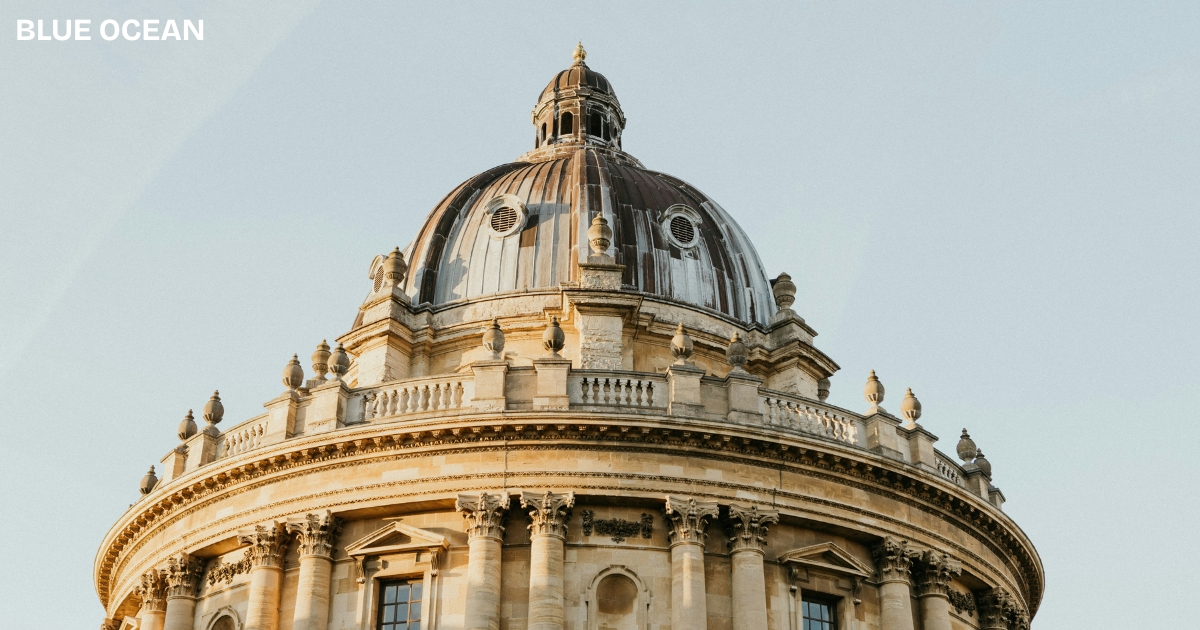
Oxford receives around 23,000 applications each year for approximately 3,300 places. That gives an overall offer rate of about 17%. But that figure is an average across all subjects and all applicant types. It obscures the reality for Indian applicants targeting the most competitive courses.
PPE (Philosophy, Politics and Economics) has an offer rate closer to 8-9%. Medicine sits below 20% but requires UCAT scores alongside exceptional academics. Computer Science is similarly competitive. The subjects where Indian applicants have the strongest profiles (sciences, mathematics, economics) are exactly the subjects where the competition is fiercest.
The most important thing to understand: Oxford's offer rate is not driven by holistic review. It is driven almost entirely by academic aptitude signals. Your entrance test score, your predicted grades, and your interview performance determine the outcome. Everything else is secondary.
What Oxford Looks For (It's Not What Harvard Looks For)
Indian students who apply to both Harvard and Oxford often make a critical error. They assume the institutions want the same things. They do not.
Oxford selects for academic depth in a single subject, not breadth. If Harvard asks "what makes you interesting?" Oxford asks "how deeply have you thought about this one subject?" Your extracurriculars matter far less here. Your ability to think critically about your chosen subject matters far more. A student with 12 activities and average subject knowledge will lose to a student with 2 activities and genuine intellectual depth in their field.
Oxford tutors read your personal statement looking for evidence of independent academic engagement. Have you read beyond the syllabus? Have you encountered an idea that changed how you think about your subject? Have you wrestled with a problem your teachers couldn't solve for you? These are the questions your application must answer.
The extracurricular list that impresses Harvard admissions (leadership, community service, scale) is largely irrelevant to an Oxford tutor. What matters is whether you think like a first-year student who belongs in their subject.
Academic Requirements for Indian Students
CBSE/ICSE/IB: What Oxford Expects
Oxford's international student requirements page specifies what it expects from Indian board qualifications. For CBSE and ICSE students, Oxford typically expects 90% or above overall, with specific subject requirements often at 95%+ in subjects relevant to your course.
IB students applying to Oxford are expected to achieve 38-40 points overall, with 6-7 in Higher Level subjects that relate directly to their chosen course. A student applying for Mathematics should have a 7 in HL Maths. A student applying for Chemistry should have 7 in HL Chemistry.
These are thresholds, not guarantees. Meeting the grade requirement gets you into the pool of serious applicants. It does not get you an offer.
Predicted Grades and How They Work
Oxford applications are submitted in October of Grade 12, before final board exams. This means Oxford evaluates your application based on predicted grades issued by your school. The predicted grade your teacher gives you carries significant weight.
If your school predicts you 88% when you need 90%, your application is at a structural disadvantage before the entrance test even happens. Indian students need to have this conversation with their school counselors early and honestly.
For IB students, the predicted score on your IB Diploma is the grade Oxford sees. A predicted 36 when you need 38 is a problem. Starting the IB with a clear plan to achieve the grades Oxford requires is the only solution.
Oxford Entrance Tests (MAT, TSA, PAT, LNAT, etc.)
Most Oxford courses require a pre-interview admissions test. These tests are not part of your school curriculum. They test raw mathematical and analytical thinking, and they are designed to be difficult even for well-prepared students. Oxford lists all course-specific admissions tests on its website.
The key tests for Indian applicants are:
- MAT (Mathematics Admissions Test): Required for Mathematics, Computer Science, and joint degrees. 2.5 hours, no calculator, proof-based and problem-solving questions well beyond A-level or IB HL Maths.
- PAT (Physics Aptitude Test): Required for Physics and joint degrees. Tests mathematical reasoning in physics contexts.
- TSA (Thinking Skills Assessment): Required for PPE, Psychology, and several other subjects. Tests critical thinking and problem-solving, not subject knowledge.
- LNAT (National Admissions Test for Law): Required for Law. Comprehension and essay-based.
- UCAT/BMAT: Required for Medicine.
A weak test score is almost always a disqualification. Oxford uses test scores to decide who gets an interview invitation. If you do not perform in roughly the top third of test-takers, you are unlikely to be shortlisted. Preparation should start 6-12 months before the test date. Past papers are available on each test's official website, and they are the most important preparation material.
The Oxford Interview: How to Prepare
Oxford interviews happen in December, conducted by the tutors who would actually teach you. Each applicant typically has 2-3 interviews, each lasting 20-30 minutes. The format varies by subject, but the purpose is consistent: to observe how you think through unfamiliar problems.
The Oxford interview is not a test of what you know. It is a test of what you do when you encounter something you don't know. The interviewer gives you a problem you haven't seen before and watches how you think through it. Preparation means practising the process of thinking out loud, not memorising answers.
For science subjects, you might be given a graph you have never seen and asked to interpret it. For PPE, you might be given a short passage and asked to critique an argument it makes. For Mathematics, you might be given a problem and guided through it step by step, with the tutor offering hints if you get stuck.
The worst thing a candidate can do in an Oxford interview is try to appear more confident than they are. Tutors value intellectual honesty. If you do not know something, saying "I'm not sure, but here is how I would approach it" is a better answer than guessing confidently and being wrong.
Interview preparation for Oxford takes 3-4 months of regular practice. It requires someone who understands what Oxford tutors are actually testing and can simulate the interview environment accurately.
The Personal Statement: UCAS vs Common App
The UCAS personal statement is 4,000 characters. That is approximately 500 words. Unlike the Common App essay, it is not about who you are as a person. It is almost entirely about your subject.
A strong Oxford personal statement demonstrates three things: that you have engaged with your subject beyond the school syllabus, that you can think critically about ideas within it, and that you have a genuine intellectual curiosity that will sustain you through three years of intensive tutorial-based study.
Oxford tutors read hundreds of personal statements. The ones that stand out describe a specific book, paper, or idea that changed how the applicant thinks about their subject. They do not list achievements. They demonstrate thinking.
Indian students who apply to both UK and US universities often make the mistake of writing a hybrid personal statement that is too personal for Oxford and not personal enough for Harvard. These are different documents serving different purposes. The UCAS statement needs to be written first, separately, with Oxford's expectations clearly in mind.
Choosing the Right Oxford College
Oxford is a collegiate university. You apply to a specific college, and your application is evaluated by tutors at that college. If your college rejects you but thinks you are strong, they may send you to another college through the "pool" system. This means your college choice matters, but it is not as high-stakes as it might appear.
The practical advice for Indian applicants: research which colleges have strong departments in your subject, consider which colleges have the most international students (some are more welcoming to international students than others), and do not choose a college purely based on its visual prestige. The tuition is the same across all Oxford colleges. The tutorials happen at your college. Choose one where the academic environment matches your subject.
Fees, Scholarships, and Financial Aid for Indians
Oxford is not need-blind for international students. Most Indian students pay full international fees, which currently run at approximately £38,000-45,000 per year for most undergraduate courses. Over three years, that is £114,000-135,000 — roughly Rs.1.1-1.3 crore at current exchange rates, before living costs.
Scholarship options are limited but real. The Reach Oxford Scholarship covers full fees, living costs, and airfare for students from countries with limited higher education access, including India. It is extremely competitive. The Rhodes Scholarship covers graduate study. Some individual colleges have bursaries for international students.
For more detail on scholarship options for Indian students at UK universities, read our guide to the Reach Oxford Scholarship.
The financial contrast with top US universities is significant. Harvard, MIT, and Princeton are need-blind and meet 100% of demonstrated financial need for international students. A family that qualifies for aid at Harvard might receive Rs.80-90 lakh annually. At Oxford, that same family pays full fees. This is a real consideration in building your school list.
Oxford Application Timeline via UCAS
The UCAS deadline for Oxford is October 15. This is the same year you are applying, meaning a student applying for entry in October 2027 must submit their application by October 15, 2026. This is 3-4 months earlier than most US application deadlines.
The timeline works as follows: UCAS opens in September, Oxford deadline is October 15, entrance tests run from late October through November, interview invitations go out in mid-November, interviews take place in December, and decisions are released in early January. Conditional offers then depend on final CBSE/ICSE/IB results in May/June.
For students applying to both UK and US universities, the October 15 deadline is a significant constraint. Your personal statement, predicted grades, and entrance test preparation must all be complete before the US application season is in full swing. Planning for this dual-track process requires starting in Grade 11 at the latest.
How Blue Ocean Students Got Into Oxford
Anushka from Delhi was admitted to Cambridge to read Law. Her spike was her direct experience at a criminal law firm, which she used to anchor every part of her application: the personal statement explored ideas she had encountered through her work, the interview answers drew on real legal thinking rather than textbook examples, and the LNAT essay demonstrated the analytical precision of someone who had observed law in practice. She received a scholarship package worth Rs.88 lakh.
The pattern across our UK admits is consistent. The students who get in do not just know their subject. They have engaged with it in ways that go beyond what any school can teach. Building that kind of profile takes 18-24 months of deliberate work. It cannot be constructed in the months before the October 15 deadline.
This is exactly what our profile evaluation is designed to assess. Dr. Sanjay reviews your current academic depth, your subject engagement, and your entrance test readiness, then gives you a specific action plan. For Oxford applicants, this evaluation happens in Grade 11 — not October of Grade 12.
Frequently Asked Questions
What grades do Indian students need for Oxford?
Oxford typically requires 90%+ in CBSE/ICSE boards (with some courses asking for 95%+) or 38-40+ in IB with 6-7 in Higher Level subjects relevant to your course. Predicted grades matter enormously since you apply before final exams. Oxford evaluates academic performance strictly within your chosen subject area, not across all subjects.
Does Oxford have entrance exams?
Yes. Most Oxford courses require a pre-interview admissions test (MAT for Maths, PAT for Physics, TSA for PPE and other subjects, LNAT for Law, BMAT/UCAT for Medicine). These tests are critical. A weak test score often means no interview invitation regardless of grades. Preparation should start 6+ months before the test date.
How is applying to Oxford different from applying to Harvard?
Fundamentally different. Oxford uses UCAS (not Common App), requires a subject-focused personal statement (not a personal narrative), conducts academic interviews (not conversational ones), and evaluates primarily on academic aptitude in one subject. Extracurriculars carry minimal weight. The application deadline is October 15, much earlier than US schools.
Does Oxford offer scholarships to Indian students?
Oxford offers limited scholarships for international students. The Reach Oxford Scholarship covers full fees, living costs, and airfare for students from low-income countries. The Rhodes Scholarship funds graduate study. Some colleges offer bursaries. However, Oxford is NOT need-blind like Harvard or MIT. Most Indian students pay full fees (approximately £38,000-45,000/year for most courses).
- Oxford University Admissions: ox.ac.uk/admissions/undergraduate
- Oxford International Students: ox.ac.uk/admissions/undergraduate/international-students
- Oxford Admissions Tests: ox.ac.uk/admissions/undergraduate/applying-to-oxford/tests
- Reach Oxford Scholarship: ox.ac.uk/admissions/undergraduate/fees-and-funding/reach-oxford-scholarships
- UCAS Application Portal: ucas.com
- Rhodes Scholarship: rhodeshouse.ox.ac.uk/scholarships