Cambridge University admissions for Indian students follow the same UCAS system and October 15 deadline as Oxford. But the experience of studying at Cambridge — and therefore what Cambridge looks for in applicants — is shaped by a distinctive academic structure: the supervision system. Understanding that system is the starting point for building a credible Cambridge application.
This guide covers the Cambridge admissions process from qualification requirements through the interview, compares the Cambridge and Oxford approach, and explains the Gates Cambridge Scholarship for Indian postgraduate students. For the Oxford side of this comparison, read our guide on how to get into Oxford from India.
Cambridge vs Oxford: The Key Differences That Matter for Indian Students
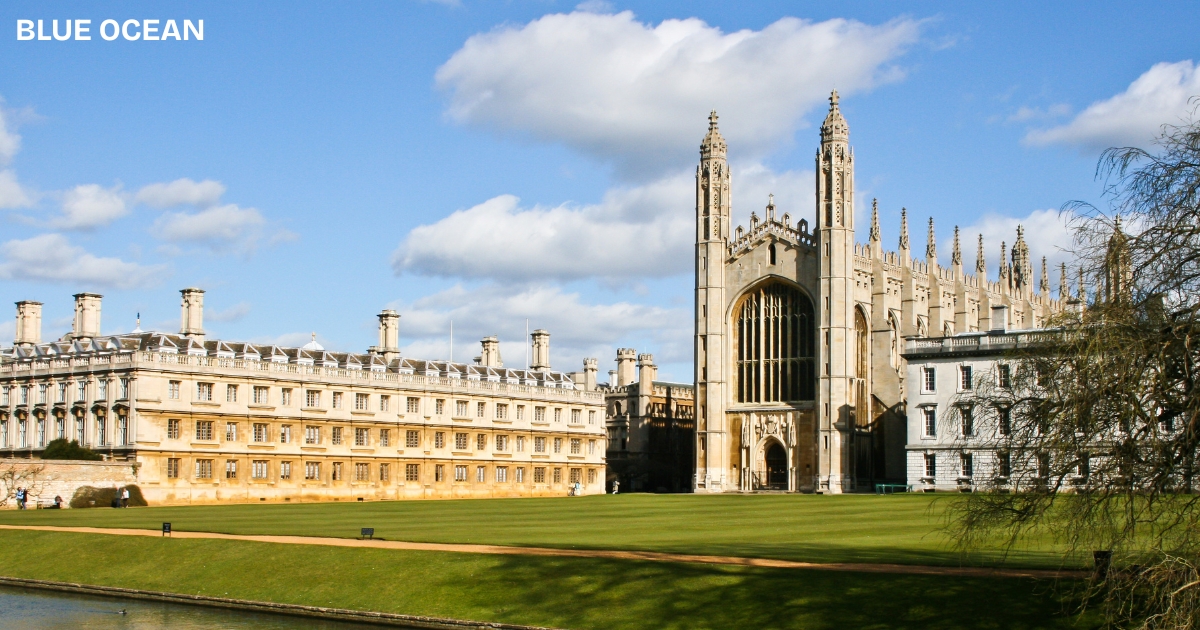
The two universities share many structural features: both use UCAS, both have an October 15 deadline, both conduct college-based interviews, and both require subject-specific admissions tests for most courses. But they differ in meaningful ways that should influence which you apply to — and how you approach the application.
Cambridge's supervision system is the defining feature of undergraduate education there. Supervisions are small group teaching sessions, usually one-on-one or one-to-two, held once or twice a week throughout each term. You read, prepare, write an essay or problem set, and then defend your thinking directly with an expert in front of you. The supervision is not a lecture — it is a debate. This means Cambridge specifically selects students who can generate their own ideas, hold positions under questioning, and revise their thinking in real time.
Both Cambridge and Oxford value deep academic engagement. The distinction is in emphasis: Oxford tends toward a single-subject focus and values students who pursue a topic to an unusual depth. Cambridge, through the supervision system, rewards students who can debate ideas, defend positions under questioning, and revise their thinking in dialogue. The right choice depends on your subject and how you learn best.
For Indian students used to a learning culture centred on absorbing and reproducing information, the supervision model can be an adjustment. The best Cambridge applicants are those who are already debating ideas — with teachers, in reading groups, through independent projects — rather than those who are simply excellent at examinations.
How Selective Is Cambridge?
Cambridge receives approximately 20,000 applications each year for around 3,500 undergraduate places. The overall offer rate is approximately 21%, though this varies significantly by course. Highly competitive courses such as Medicine, Economics, and Law see offer rates well below 20%. Less competitive courses in certain humanities may have slightly higher rates.
Indian applicants compete in the international student pool, where Cambridge considers applicants from across the world. Cambridge does not publish country-specific admission statistics, but the number of Indian undergraduates admitted each year is modest — typically a few dozen across all courses. This means the competition among Indian applicants is significant, and a strong CBSE or ISC result alone is not sufficient differentiation.
Qualifications Cambridge Accepts from India
Cambridge accepts all three of the main qualifications available to Indian students:
- ISC (Indian School Certificate): Cambridge expects very high scores — typically 95%+ aggregate — with strong performance in subjects directly relevant to your intended course. Individual subject scores matter more than aggregate alone.
- CBSE (Central Board of Secondary Education): Similar benchmark to ISC. Cambridge will look at both Class 10 and Class 12 results and will assess the trajectory and consistency of your academic performance.
- IB (International Baccalaureate): Cambridge typically requires 40-42 points overall with 7s at Higher Level in subjects relevant to the intended course. IB is particularly well-regarded at Cambridge because the extended essay requirement demonstrates the kind of independent intellectual work the supervision system rewards.
Cambridge also accepts A-Levels, the Scottish Highers, and many other international qualifications. For Indian students taking A-Levels through British Council, the standard Cambridge A-Level requirements apply — typically A*A*A for the most competitive courses.
Admissions Tests for Cambridge
Like Oxford, Cambridge requires subject-specific admissions tests for most courses. These tests are a critical filter — they help Cambridge differentiate between large numbers of applicants who all have near-perfect predicted grades.
Key Cambridge admissions tests include:
- CTMUA (Cambridge Test of Mathematics for University Admission): Required for Mathematics and related courses. Tests mathematical thinking rather than factual recall.
- ENGAA (Engineering Admissions Assessment): Required for Engineering. Covers mathematics and physics problem-solving.
- NSAA (Natural Sciences Admissions Assessment): Required for Natural Sciences. Covers multiple science disciplines depending on the modules chosen.
- LNAT (Law National Aptitude Test): Shared with Oxford and other law schools. Tests verbal reasoning and written argumentation.
- BMAT (Biomedical Admissions Test): Previously required for Medicine at Cambridge — check current Cambridge Medicine requirements as testing formats change.
- TMUA (Test of Mathematics for University Admission): Required for Economics and some joint courses.
Registration for admissions tests typically closes in September or early October. Indian students should confirm the test requirements for their specific Cambridge course on the Cambridge undergraduate admissions website and register early. The British Council operates test centres in major Indian cities.
The Cambridge Personal Statement
Cambridge uses the same UCAS personal statement as Oxford — 4,000 characters, one statement sent to all universities you apply to through UCAS. This creates a real tension if you are applying to both Oxford and Cambridge (which you cannot do simultaneously through UCAS — applicants must choose one or the other in any given year).
For Cambridge, the personal statement should demonstrate independent academic engagement with your subject. Tutors are looking for evidence that you have gone beyond the school curriculum: books read and critically engaged with, ideas you have explored independently, research or projects that show genuine intellectual curiosity. The Cambridge tutor reading your personal statement is asking: "Would I enjoy supervising this student? Are they capable of generating and defending their own ideas?"
What to avoid in a Cambridge personal statement: long lists of achievements without intellectual substance, vague statements about passion for a subject, and anything that reads as trying to impress rather than as genuine intellectual engagement. The personal statement works when it reads as the product of someone who genuinely thinks about their subject outside of school, not someone performing enthusiasm for the benefit of an admissions reader.
The Cambridge Interview: A Mini-Supervision
Cambridge interviews are conducted by college tutors in December, following the same UCAS deadline as Oxford. International students, including those from India, interview online. Most applicants have two or three separate interview sessions, each lasting 20 to 40 minutes.
"The Cambridge interview is essentially a mini-supervision. The tutor gives you a problem or idea you have never seen before and watches how you think. Students who have spent years in a system that rewards memorising correct answers often freeze. The students who succeed are those who are comfortable saying 'I'm not sure, but here's how I'd think about it' and then actually thinking, out loud, in front of the tutor."
Preparation for a Cambridge interview should focus on developing the habit of thinking aloud through unfamiliar material. Practice with past interview-style questions in your subject. Work with a tutor who can challenge your thinking in real time. Read widely in your subject and develop genuine opinions about the ideas you encounter — opinions you can defend and revise when questioned.
The interview is not a test of whether you are charming, confident, or well-prepared in the conventional sense. It is a test of intellectual flexibility — and that can be developed through deliberate practice.
The Cambridge Online Preliminary Application (COPA)
Some Cambridge courses require a Cambridge Online Preliminary Application (COPA) in addition to the UCAS application. The COPA collects information about your academic work, including details of any research or independent study, your reasons for applying to Cambridge, and your choice of college. Not all courses require COPA — check the specific requirements for your course.
If your course requires COPA, the deadline is the same as the UCAS deadline: October 15. Missing the COPA deadline will remove your application from consideration even if your UCAS application is submitted on time.
Choosing a Cambridge College
Cambridge has 29 undergraduate colleges. As with Oxford, you apply to a specific college through UCAS, or you make an open application to be randomly allocated to a college with available places for your course.
College choice matters more at Cambridge than many applicants realise, because your college will be the primary site of your supervision experience. The tutors at your college will supervise you — this means they are the people who will teach you most intensively throughout your degree. Researching the academics at a college for your specific subject is worth the time.
A practical consideration: some Cambridge colleges have a higher proportion of international students and more established support systems for students from India. Colleges like King's, Trinity, St John's, and Pembroke have historically admitted more international students, though this varies by year and course.
Anushka from Delhi was admitted to Cambridge with a scholarship worth ₹88 lakh. Her spike was direct experience at an actual law firm practising criminal law — not a mock trial or a school debate, but real professional exposure. That first-hand engagement with the discipline made her personal statement and interview responses specific in a way that purely academic preparation cannot replicate.
Cambridge vs US Universities: What Indian Students Need to Know
Many Indian students applying to the UK are also considering US universities. There are significant structural differences that affect your approach:
- Duration: A Cambridge undergraduate degree is three years (four for some courses). US degrees are typically four years. This affects total cost and time to employment.
- Application system: Cambridge uses UCAS with a single personal statement. US universities use the Common App or Coalition App with multiple supplemental essays. The two systems require very different preparation strategies.
- Specialisation: Cambridge requires you to commit to a specific subject from day one — you cannot change to a different faculty the way you can at many US universities. This is not a disadvantage if you have clear subject focus, but it is a constraint if you are still exploring.
- Scholarships: UK universities do not typically offer merit scholarships at the scale of US institutions. Financial aid at Cambridge for international students is limited. The Gates Cambridge Scholarship covers costs for postgraduate study only.
Is Cambridge the Right Target for Your Profile?
The supervision system rewards a specific kind of learner. The question is whether your academic background, preparation, and subject focus are aligned with what Cambridge selects for. Dr. Sanjay has worked with students who were right for Cambridge, and students who were better positioned for Oxford, LSE, or top US universities. Find out which fits your profile.
Get a Free Profile EvaluationThe Gates Cambridge Scholarship for Indian Students
For postgraduate study at Cambridge, the Gates Cambridge Scholarship is the most significant funding opportunity available to Indian students. Funded by the Bill and Melinda Gates Foundation, the scholarship covers full tuition fees, a maintenance allowance, and flight costs for the duration of a postgraduate degree (Masters or PhD).
Approximately 80 international scholarships are awarded each year. Indian students are eligible and have received the scholarship consistently. Selection is based on three criteria: outstanding academic achievement, a genuine commitment to improving lives of others, and leadership potential. Unlike many scholarships that prioritise one dimension, Gates Cambridge explicitly looks for candidates who are exceptional on all three simultaneously.
The application process runs alongside the Cambridge admissions application. You apply for the scholarship at the same time as you apply to Cambridge. The Gates Cambridge Trust provides shortlisted candidates with a separate interview, which focuses specifically on your social impact vision and leadership philosophy rather than your academic subject knowledge.
For Indian students considering postgraduate study, the Gates Cambridge Scholarship is worth understanding in detail well before you apply. The Gates Cambridge Trust website publishes profiles of past scholars, which are the single most useful resource for understanding what the selection committee actually looks for.
Building a Cambridge-Quality Academic Profile from India
The gap between a good Indian school profile and a Cambridge-competitive profile is not primarily about grades — it is about independent intellectual engagement. Students from India who are admitted to Cambridge have typically done more than ace their board exams. They have read books in their subject area beyond the syllabus, engaged with research through internships or independent projects, participated in Olympiads or subject competitions at a national or international level, or developed a specific area of expertise that they can speak about with depth and precision.
Shreejeet from Delhi received a scholarship worth ₹1.3 crore for his UK admissions. His spike was extracurricular reading of graduate-level mathematics — he had worked through material several years ahead of his school curriculum, not as a performance for applications but because he genuinely found it interesting. That depth of engagement in a single subject is exactly what Cambridge's mathematics tutors are looking for.
The most effective way to build a Cambridge-quality profile is to identify your academic spike — the area of genuine depth — and pursue it with increasing seriousness over the years before application. Competition results, research experience, published work (even at a school or local level), and engagement with ideas through writing and debate all contribute to a profile that reads as intellectually serious rather than strategically assembled.
Practical Next Steps for Indian Students
If you are seriously considering Cambridge, here is a sequenced set of actions depending on where you are in your academic journey:
- Two or more years before application: Identify your subject and begin reading beyond the school curriculum. Pursue Olympiads, research internships, or independent projects in your area. Develop genuine opinions about ideas in your field.
- One year before application: Research Cambridge colleges and courses. Confirm admissions test requirements for your course and begin preparation. Draft and revise your personal statement. Practice thinking aloud through unfamiliar academic problems.
- September of application year: Register for admissions tests. Submit COPA if required by your course. Begin UCAS application drafting.
- October 15: UCAS deadline. Submit your application before this date — there are no extensions.
- November: Sit admissions tests. Prepare for interview if shortlisted.
- December: Interviews (online for Indian students).
- January: Cambridge decisions released.
For more detail on the broader UK university admissions picture, including how Cambridge compares to other top UK institutions such as LSE, Imperial, and UCL, read our complete guide to UK university admissions for Indian students.
Frequently Asked Questions
What grades do Indian students need for Cambridge University?
Cambridge typically requires A*A*A at A-Levels for most courses. For Indian students on CBSE or ISC boards, the general benchmark is 95%+ aggregate with high scores in relevant subjects. IB students should aim for 40-42 points with 7s in higher-level subjects relevant to their course. However, grades alone are not sufficient — admissions tests and interview performance carry significant weight.
Is Cambridge harder to get into than Oxford for Indian students?
Both are similarly competitive, with overall offer rates around 17-21%. The key difference is not difficulty but style. Cambridge uses the supervision system intensively — tutorials are one-to-one or one-to-two — which means it is looking specifically for students who can generate ideas and debate them, not just absorb information. Neither is "harder" in absolute terms, but the fit depends on your subject and how you learn.
Does Cambridge accept CBSE and ISC qualifications?
Yes. Cambridge accepts CBSE, ISC, and IB qualifications. The typical benchmark for CBSE and ISC applicants is 95%+ aggregate with subject-specific requirements depending on the course. Cambridge will specify the exact requirements on your offer letter. Individual subject scores and relevance to the intended course matter, not just aggregate.
What is the Gates Cambridge Scholarship and can Indian students apply?
The Gates Cambridge Scholarship covers full tuition, accommodation, and living costs for outstanding postgraduate students from outside the UK. Indian students are eligible and regularly receive the scholarship. It is highly competitive — around 80 international scholarships are awarded annually — and selection is based on academic excellence, leadership potential, and a commitment to improving lives of others.